


Three ways to sleep off the ground, compared on price, payload, park length limits, winter use, insurance and resale.
Twenty-one feet. That is the longest vehicle, or vehicle combination, allowed in the middle of Going-to-the-Sun Road in Glacier National Park, bumpers included. A short-wheelbase camper van comes in under it. A pickup towing a 20-foot travel trailer does not. That one number says a lot about the truck camper vs camper van vs travel trailer question, because the choice is less about which rig is "best" and more about which limits you are willing to live with.
So this is a straight comparison of the three. No rig is getting a sales pitch here, and this isn't an owner's diary. What follows is the pros and cons of each type, built from park rules, insurance data, industry price ranges, and what the people who build and sell these rigs say themselves (with their names attached, because every one of them is selling something).
The short answer
If you want the whole article in three sentences, here it is. A truck camper costs far less than a camper van, as long as you already own, or are willing to buy, a truck with enough payload to carry it. A camper van needs no hitching or loading and is one vehicle that drives, parks and camps, but it costs the most to buy, and J.D. Power counts Class B rigs among the faster-depreciating RV types. A travel trailer gives you the most sleeping room for the money and frees your tow vehicle for day trips once you unhitch, but backing it into a site is a skill to learn, and its total length runs into park road and campground limits.
Start with the vehicle you already own and the roads you want to drive. The rest of this article is the detail behind those three sentences.
What you're actually comparing
The names get used loosely, so it helps to pin them down. A truck camper, according to Alaskan Campers, which builds them, is "a self-contained unit that mounts in the bed of a pickup truck. It loads for travel, unloads at home or camp, and leaves the truck otherwise unchanged." Pop-up and hard-side versions both exist, and some ride on a flatbed instead of a factory bed.
A camper van is a cargo van, most often a Mercedes-Benz Sprinter, Ford Transit or Ram ProMaster, converted into a place to sleep and cook. Go RVing, the consumer site of the RV Industry Association, files them under Class B motorhomes, "also known as camper vans." The key thing is that the vehicle and the camper are one unit. You cannot leave the house at camp and drive the van to town.
A travel trailer is a towable. Go RVing's travel trailer page says the smaller models can be towed by mid-size vehicles, including a family sedan or minivan, while larger models need an SUV or pickup. Trailers are the volume end of the RV world. In June 2026 alone, the RV Industry Association counted 22,728 towable RVs shipped, "led by conventional travel trailers," against 2,756 motorhomes (RVIA June 2026 report). Here is how Go RVing sizes and prices the three:
| Rig | Typical length | Average cost | Sleeps |
|---|---|---|---|
| Truck camper | 8–20 ft (2.4–6.1 m) | $20,000–$40,000 | 2–6 |
| Camper van (Class B) | 16–21 ft (4.9–6.4 m) | $100,000–$150,000 | up to 4 |
| Travel trailer | 20–35 ft (6.1–10.7 m) | $20,000–$35,000 | up to 10 |
Read that table carefully, because it hides the biggest number in the whole comparison. The truck camper and travel trailer prices do not include the truck that carries or tows them. The van price does. More on that in the money section.
Truck camper pros and cons
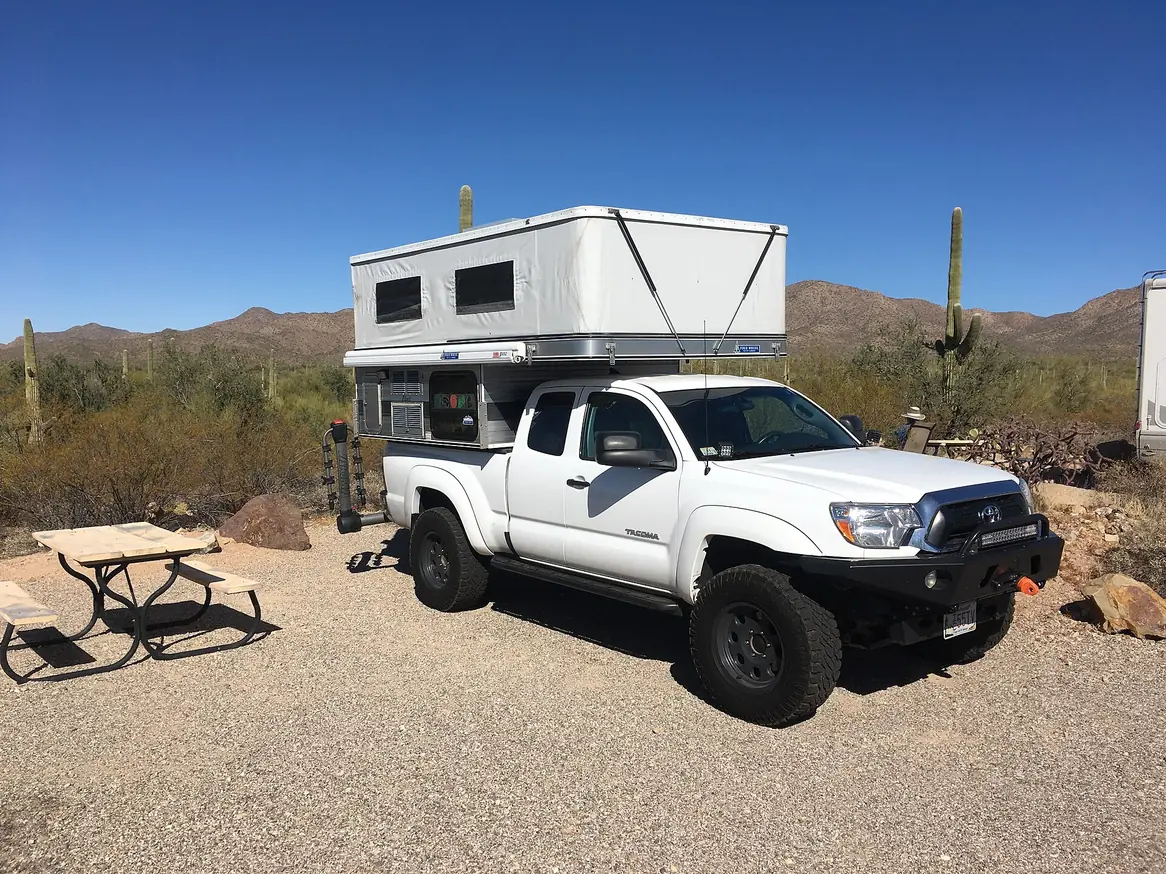
The truck camper's whole appeal is in Alaskan's definition: it loads for travel and unloads at home. The truck stays a truck. That gives it a set of strengths the other two can't match, and one weakness that decides almost everything.
Pros
There's no trailer behind it. The camper rides in the bed, so there is no second axle to swing wide on a switchback and no trailer to back up. Some campers hang past the tailgate, so measure the loaded rig before trusting any length limit. Go RVing's truck camper page makes the point that it "leaves the truck's bumper free," which means the same rig can still tow a boat, ATVs or a small trailer.
The truck is still a truck. Pull the camper off, set it on its jacks, and the truck goes back to work or to the grocery store. Owners in a Truck Camper Magazine reader thread describe storing them on jacks, dollies, blocks or stands, and one owner in an HOA keeps it unloaded in the backyard.
It costs much less than a van, if you already own the right truck. Go RVing's $20,000–$40,000 average is a fraction of the van range. If the truck in your driveway can legally carry it, the camper is the only thing you are buying.
Insurance splits the way the rig does, according to Alaskan. It notes that "the truck is insured as a truck, while the camper is covered separately as an RV unit." Resale works the same way. You can sell the camper and keep the truck, or the other way around.
Cons
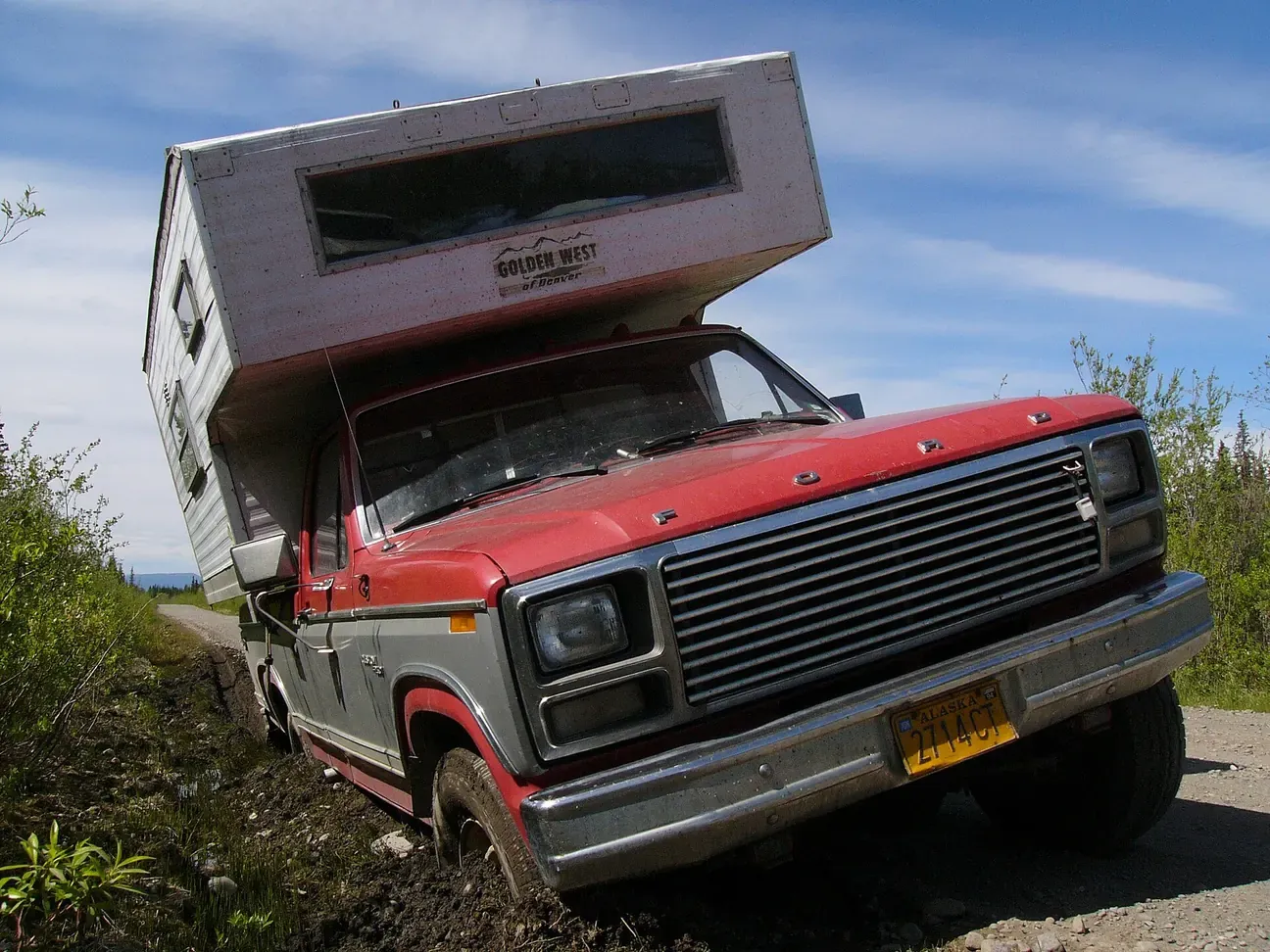
All that weight rides high. Torklift, which makes the tie-downs that hold campers to trucks, puts it plainly: a truck camper is "a dynamic load. It has a high center of gravity. It rides on top of the truck bed." Crosswinds push against "the camper's broad profile and high center of gravity." On a side-sloped dirt road, that's weight in the worst place.
Fuel economy takes a hit. Go RVing's truck camper page says the tow vehicle's normal mileage will drop "by a third to a half," and adds that this varies. The U.S. Department of Energy says the same thing in general terms: carrying excessive weight decreases fuel economy, and cargo up top adds aerodynamic drag.
Space is tight. Go RVing lists truck campers at 8 to 20 feet. A pop-up on a mid-size pickup is a bed, a small kitchen and not much else. And the truck you already have may not be able to carry it at all. That one deserves its own heading.
The payload sticker comes first
Truck Camper Magazine is blunt about payload: "Never use the GVWR ... or payload information published on a truck manufacturer's website or brochure ... Only use the GVWR and payload information physically posted on your truck." The method is to weigh the truck with a full tank at a certified scale, subtract that from the GVWR on the door sticker, and compare what's left against the camper's wet weight plus options, cargo and people.
The same magazine calls truck payload matching mistakes "probably the most expensive mistakes in all of truck camper-dom" (Truck Camper Magazine). Truck Camper Adventure's FAQ adds that most half-ton trucks "will need upgrades to the shock absorbers, spring packs, brakes, and tires," usually LT tires in Load Range D or E.
This is where the price advantage can fall apart. Alaskan says its own lineup starts at $44,995, and that a new 2026 F-250 Super Duty starts around $48,535, with a camping-suited configuration at $60,000 to $70,000. Alaskan's estimate for a realistic new truck plus camper is $90,000 to $135,000. That's a truck camper builder talking, so treat it as one company's number. Still, if you have to buy the truck too, a truck camper is no longer a budget rig.
If you are leaning this way, W7BR's 2026 truck camper buyer's guide goes deep on flatbed models and payload. I won't repeat it here.
Camper van pros and cons
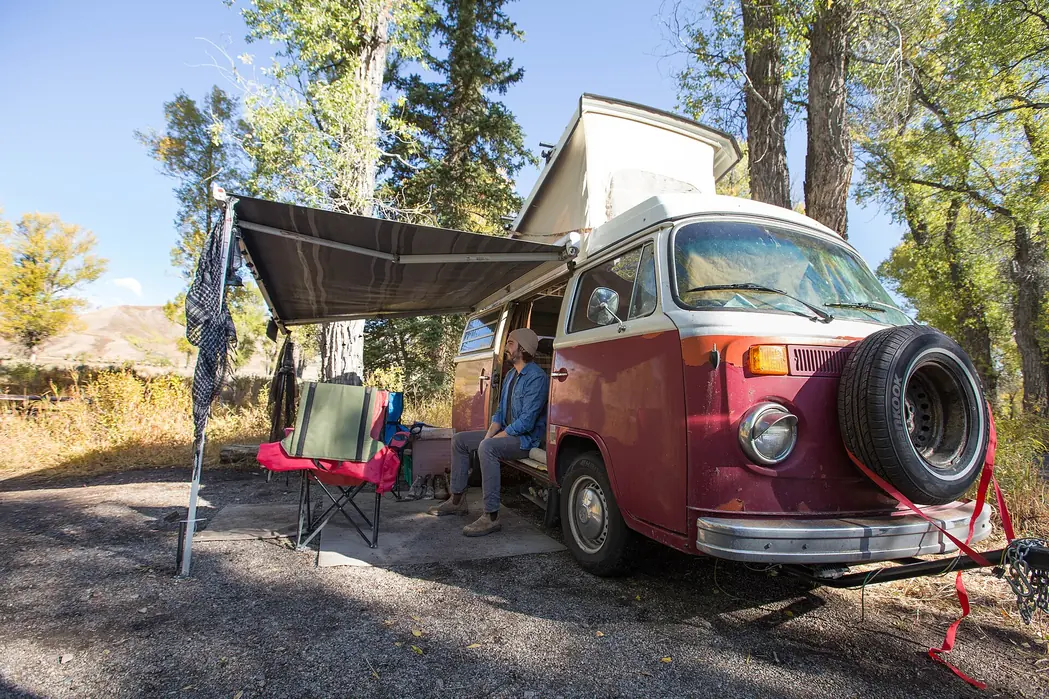
The camper van's big idea is one vehicle that does everything. That's its strength, and it's also where most of its costs come from.
Pros
It drives like a van. Go RVing describes Class B camper vans as having the conveniences of a motorhome but being "compact enough to make driving one as easy as your regular van or SUV." No hitch, no separate box, no learning to back up a trailer.
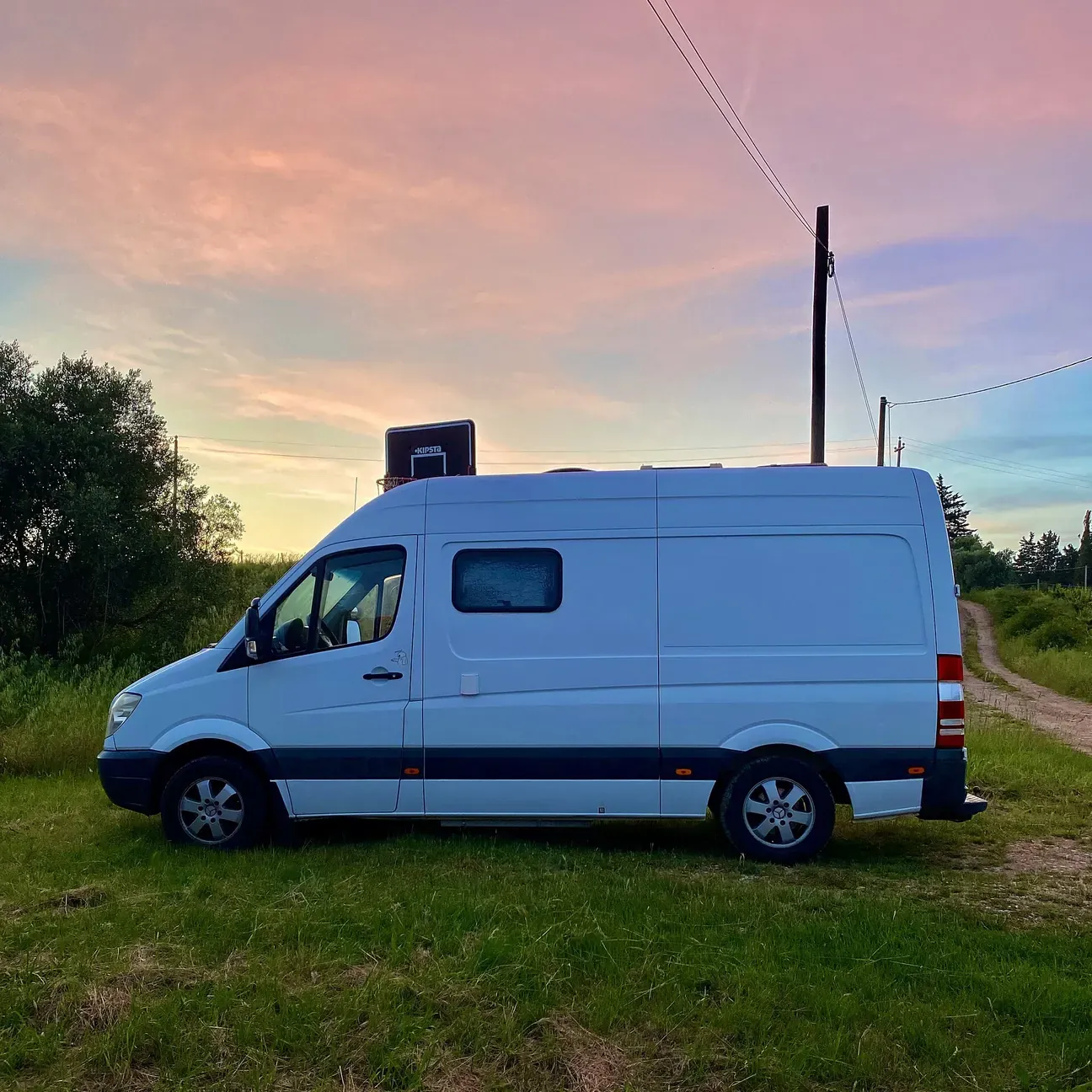
It parks like a van, too, at least the short ones. Sportsmobile, which builds van conversions, says the 144-inch wheelbase Sprinter "fits in a standard parking space," and that the high roof gives 6 feet 3 inches of interior headroom. A Sprinter dealer spec sheet lists the 144-inch van at 234 inches long, which is 19.5 feet (5.9 m) (Sprinter exterior dimensions). That's under Glacier's 21-foot limit.
No unhitching, no unloading. There's no trailer to level and no camper to take off the truck. In bad weather you can go from the driver's seat to the bed without stepping outside.
Heat is one install away. Brooklyn Campervans, a van builder, describes a diesel air heater that draws from the van's own fuel tank. They say a 13,600 BTU unit takes a Sprinter "from freezing to 70F in about 15 minutes" while burning 0.06 to 0.14 gallons an hour, at an installed cost of about $3,100. Their warning is worth noting: cheap heaters often aren't rated for altitude.
Cons
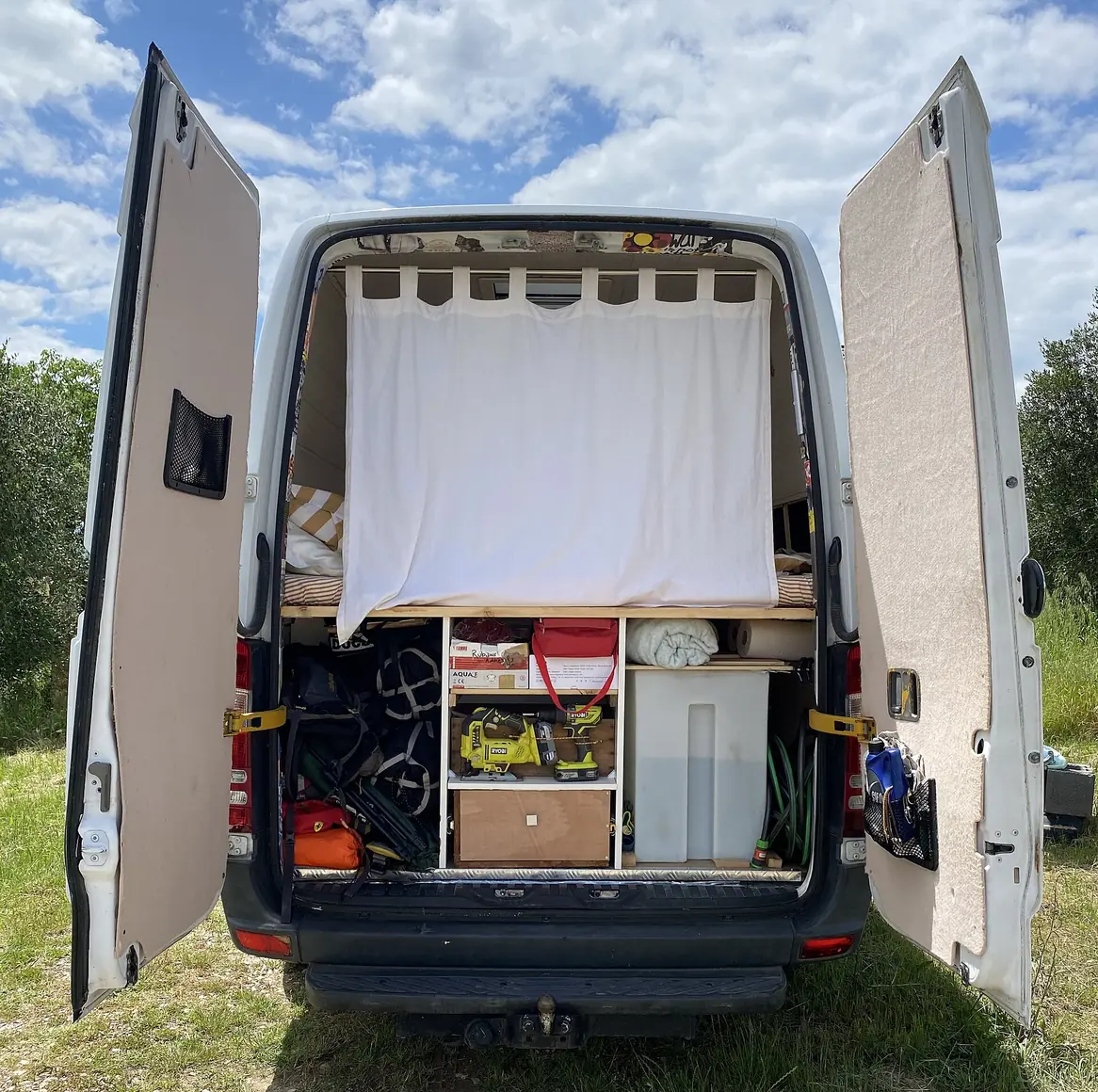
The price. Go RVing's average is $100,000 to $150,000. Sportsmobile says a bare Sprinter cargo van "starts around $49,000," with a 144-inch high-roof diesel 2500 running $52,500 to $73,000 and the 170-inch version $55,700 to $76,000. All-wheel drive adds $6,820. Its own conclusion: "A fully built Sportsmobile conversion, plus van, can exceed $200,000."
Your house and your car break down together. A breakdown takes out your transport and your bed at the same time. Alaskan's argument is that a van "stays in camper mode," and that many part-time owners end up buying a second daily driver. When the van is in the shop, your camping rig is in the shop too. With a truck camper or trailer, one half can keep working while the other gets fixed.
Maintenance can run high. RepairPal averages quoted by Alaskan put a Sprinter 2500 at $1,778 a year in repairs and maintenance versus $947 for a Transit 250. That's a vendor quoting a third party, so treat it as a rough gap, not a budget line.
Check the clearance before the dirt road. Alaskan puts a stock rear-wheel-drive Sprinter at "approximately 7.5 inches" of ground clearance, on 30-inch tires and with no locker, and says lifting and armoring one costs $8,000 to $12,000. Alaskan sells truck campers, so read that as the competition talking. Whatever van you look at, check its clearance, tires and drivetrain against the roads you plan to drive.
Depreciation. J.D. Power estimates new RVs lose about 20% driving off the lot, and says "fifth-wheels have the most rapid depreciation, followed closely by Class A and Class B vehicles." A Class B is a camper van.
The build is a second budget
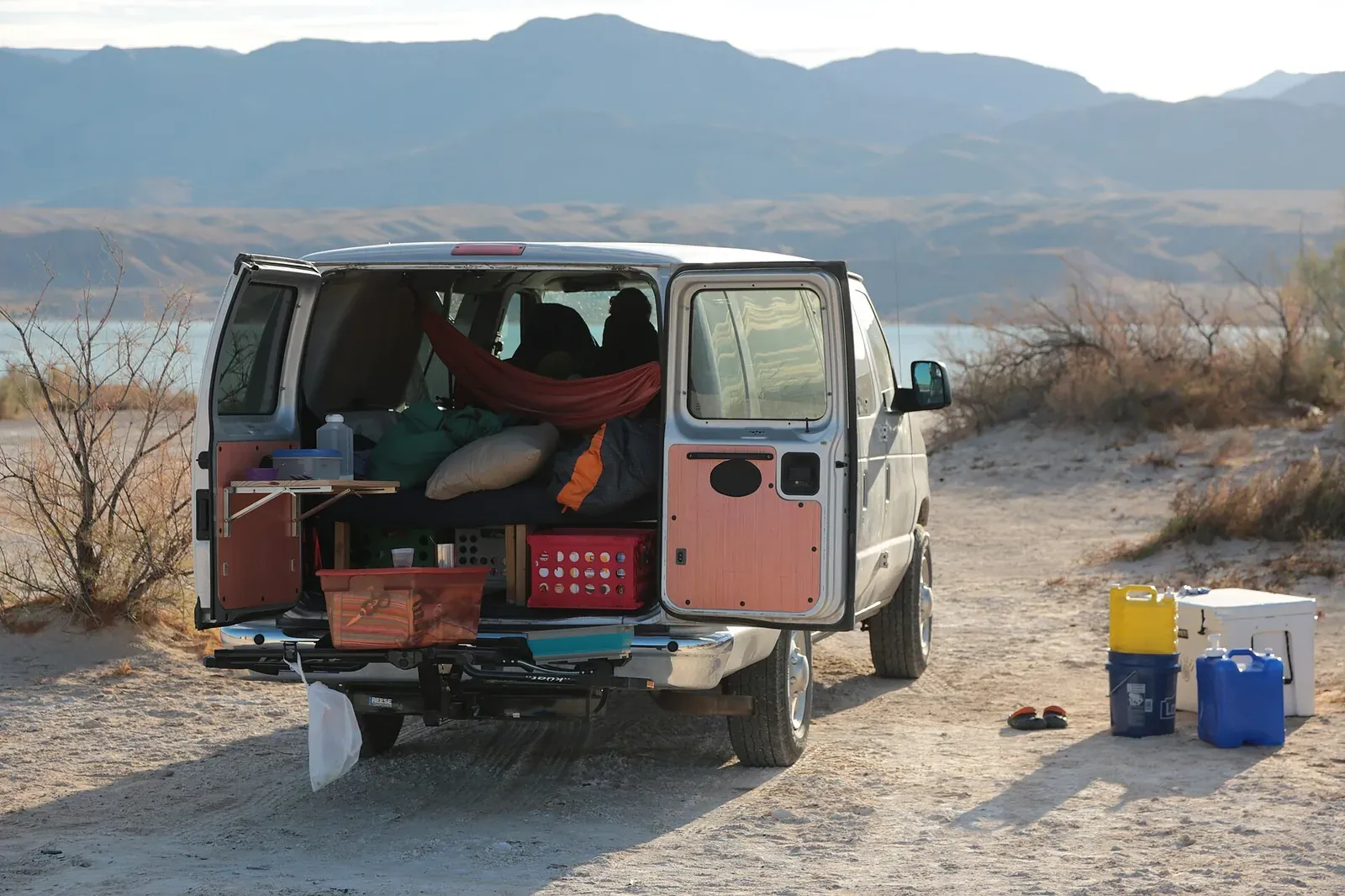
When people say a camper van costs a certain amount, ask which half they mean. Alaskan lists 2026 base prices for the three common cargo vans: the Sprinter at $48,990, the Transit at $48,400 and the ProMaster at $45,325. On top of that comes the conversion. Alaskan quotes Sportsmobile's numbers as $40,000 to $70,000 for a partial conversion and $70,000 to $160,000 for a full professional build. A do-it-yourself build is $15,000 to $40,000 in materials, plus hundreds of hours of your time.
Used vans soften the first half. Sportsmobile lists used 2019 to 2021 Sprinter cargo vans at $32,000 to $48,000. A cheaper van doesn't make the build cheaper, though.
Is it worth it? For someone who wants one vehicle that does everything and parks anywhere, maybe. For a few weekends a year, that's a lot of money sitting in the driveway.
Travel trailer pros and cons
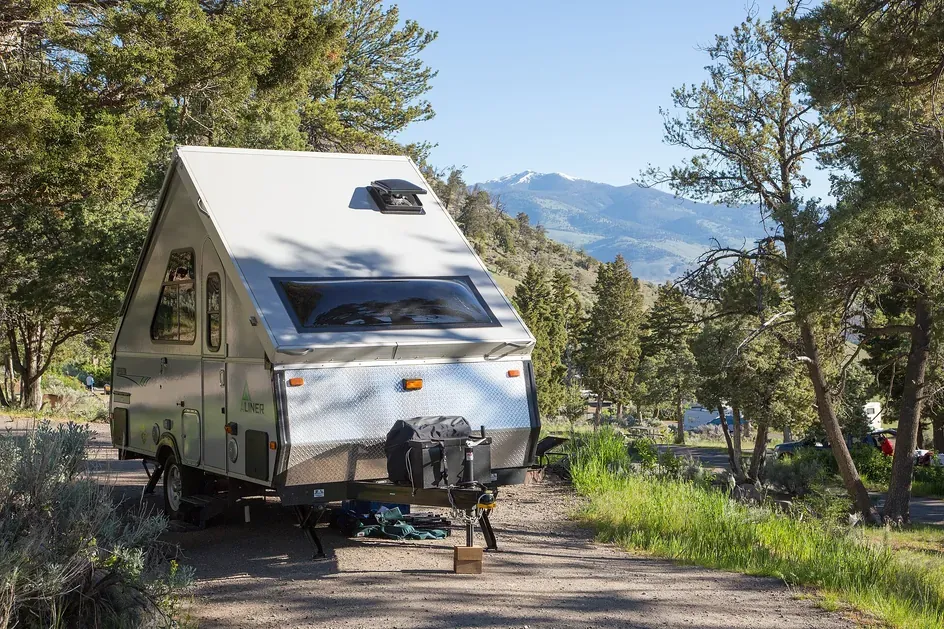
The travel trailer is the default answer for a reason. It's the most space for the money, and the RV industry ships more of them than anything else.
Pros
Room. Go RVing lists travel trailers at 20 to 35 feet, sleeping up to 10. It notes that they're large enough for extra storage and "full size showers and bathtubs," and some have bunk beds. Of the three, it has the highest listed sleeping capacity.
Price. Go RVing's average for a travel trailer is $20,000 to $35,000. That's about the same as a truck camper and a fraction of a van.
Unhitch and the truck is free. Once the trailer is set up at camp, the tow vehicle is just a vehicle again. Day trips to a trailhead, a town or a narrow road the trailer could never fit down are all on the table. The camp stays put.
Range of sizes. A small trailer can sit behind an SUV. The Airstream Basecamp, for example, is 20 feet long with a gross vehicle weight rating of 4,300 to 4,500 pounds and a hitch weight of 508 to 535 pounds. Go RVing's range runs up to 35 feet, and the bigger the trailer, the more tow vehicle it takes.
Cons
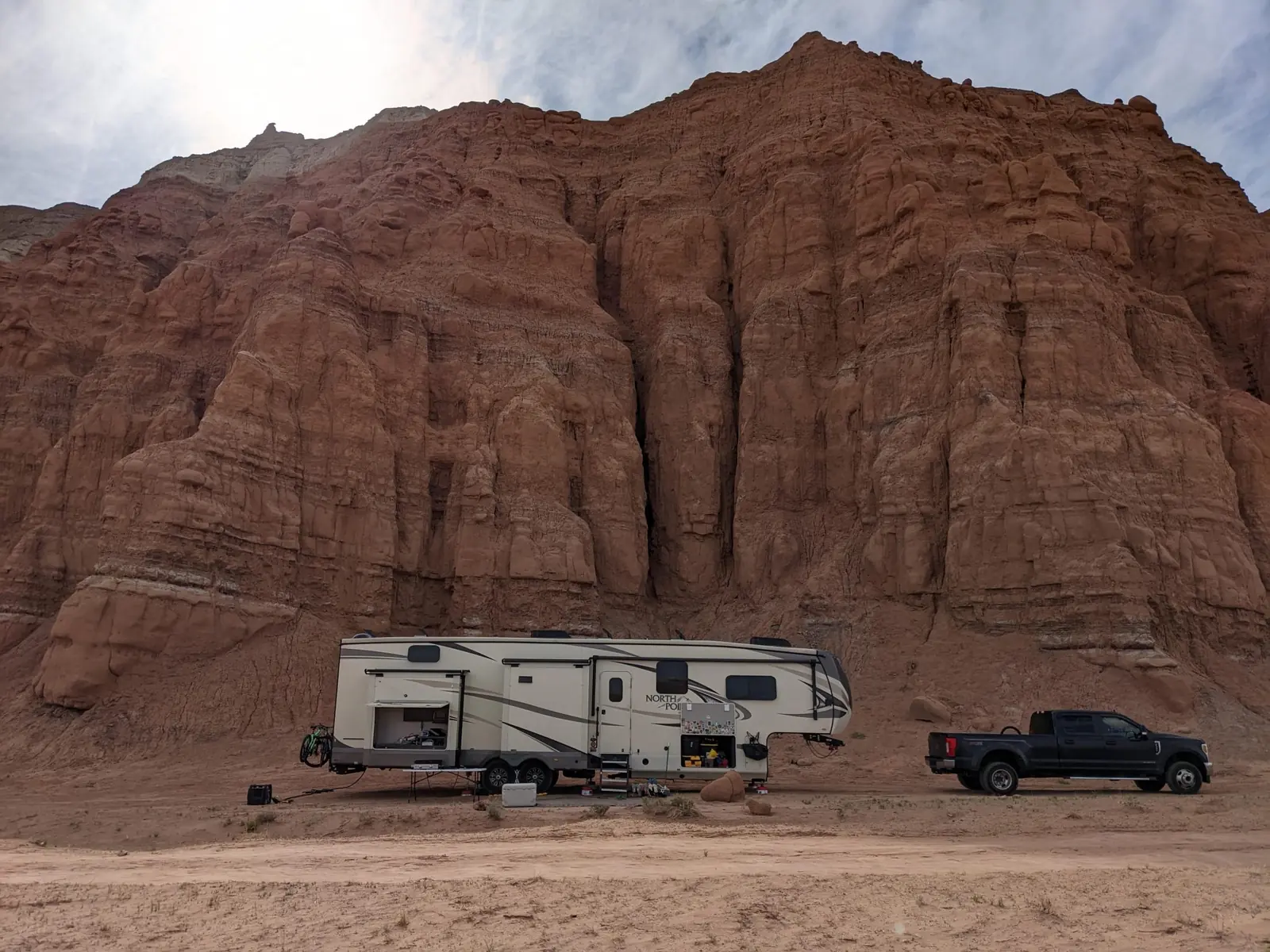
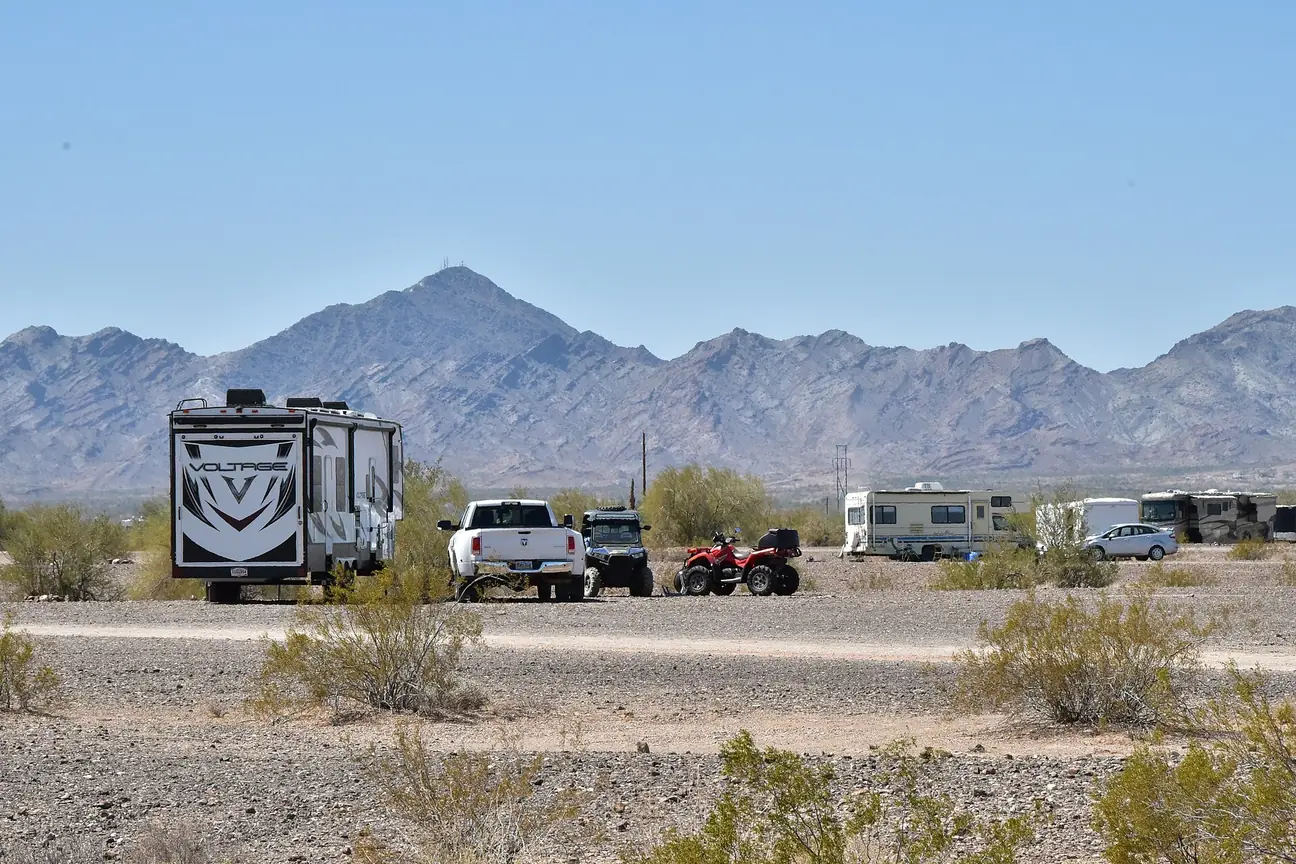
You need the right tow vehicle, and the numbers fool people. The photo above is a fifth wheel, a different towable that J.D. Power singles out for fast depreciation, but the tow vehicle math works the same way. Camping World, a dealer, gives typical ranges: "Most SUVs tow 5,000 to 10,000 lbs, mid-size trucks 4,000 to 7,700 lbs, full-size trucks 11,000 to 13,500 lbs, and heavy-duty trucks 20,000 to 40,000 lbs, depending on trim level." It also warns that the dry weight on a trailer's spec sheet "does not include the weight of the passengers or cargo you'll add, nor ... full holding tanks." Shop by the loaded number, not the brochure number.
More hardware. Airstream's support pages recommend a weight distribution hitch, which uses spring bars to spread tongue weight across the axles of the trailer and the tow vehicle. Trailer brake rules vary by state. The RV Industry Association keeps a state-by-state brake table, and it's worth reading before you buy.
Length is the limit that keeps showing up. A truck plus a trailer is the longest combination on this list. That affects which park roads you can drive and which campsites you can fit, and it's covered in the next section.
Fuel. Towing costs mileage. The Department of Energy lists towing a trailer as one of the things that cut fuel economy. How much depends on the trailer, the tow vehicle and the road.
Backing up is the skill
The highway part of towing gets the attention. The campsite is the harder part. Camping World says backing a travel trailer into a campsite "is one of the trickiest skills any towable RV owner has to master," and that "towing a travel trailer or fifth wheel on the highway is easier than parking and maneuvering around a campground." Its advice is simple: walk the site first, use a spotter, and practice in an empty lot before the first trip. It takes time, and a busy campground loop is a bad place to learn. For a firsthand version of the trailer story, W7BR's From Tent to Trailer covers how one family made the jump.


Where each one can go


Here's where the three really split, and it's mostly about size. Every limit below applies to the loaded rig, including mirrors, racks and anything hanging off the back.
Glacier. On Going-to-the-Sun Road, the National Park Service says "vehicles and vehicle combinations longer than 21 feet (including bumpers) or wider than 8 feet (including mirrors), are prohibited between Avalanche Creek and Rising Sun." It adds that vehicles over 10 feet tall may have difficulty heading west from Logan Pass. A 144-inch Sprinter, listed at 19.5 feet, is under the length limit, though a finished van still has to clear the width rule with its mirrors and accessories. A 170-inch Sprinter, listed at 274 inches (22.8 feet), is over it. A pickup towing a 20-foot trailer like the Basecamp is well past 21 feet before you even measure the truck. A truck camper depends on the truck and how far the camper hangs past the tailgate, so measure yours.
Zion. Starting June 7, 2026, the National Park Service changed the rules on the Zion–Mount Carmel Highway. Vehicles longer than 35 feet 9 inches, wider than 7 feet 10 inches, taller than 11 feet 4 inches or heavier than 50,000 pounds are no longer allowed between Canyon Junction and the East Entrance. "Combined vehicles, such as trucks with trailers, cannot exceed 26 feet from hitch to rear axle and 50 feet overall." The park also tells drivers to check for aftermarket roof racks and tires, which change a vehicle's real dimensions. Check every number against your own rig. Trailer owners have one more: the hitch-to-axle length.
Campgrounds. Yosemite's camping FAQ says allowable lengths "are almost always different depending on if you are in a RV or a trailer (trailer maneuverability limits trailer length)." The limits come from access roads and turning radius. In other words, at Yosemite a trailer usually gets a shorter length limit than a motorhome does.
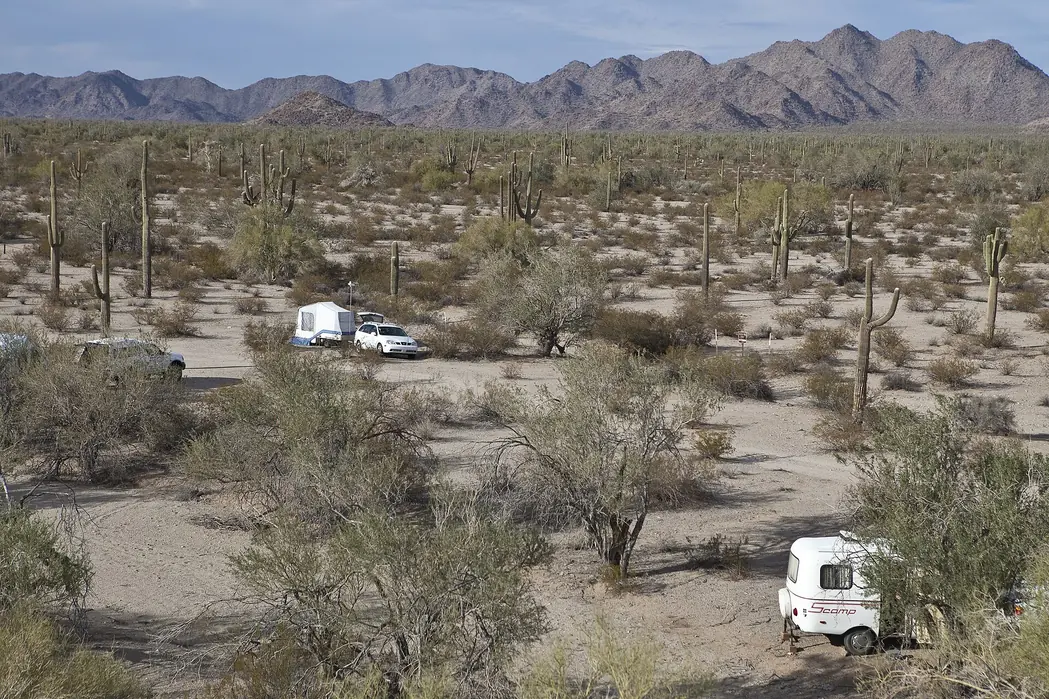
BLM land. The Bureau of Land Management says most BLM land allows dispersed camping unless an area is posted "Closed to Camping," generally "limited to 14 days within any 28-day period." It also says, pointedly, that "dispersed camping is for short-term recreation, not long-term living." The rule is the same whatever you drive. The difference is which rig can get down the road to the good spot, and that brings us back to length, clearance and whether you can turn around. W7BR's BLM dispersed camping guide covers the rules and how to find sites.
Where do I land? I am not going to bury the lede. In my view, if the trips you dream about are narrow park roads and tight forest spurs, the trailer is the one working against you.
Winter and long stays

Cold weather is a different test, and none of the three passes automatically. For truck campers, Truck Camper Adventure points out that there's no industry standard for "four-season." At a minimum it looks for enhanced insulation, dual-pane windows, heated holding tanks and a powerful furnace. Three-season campers are for temperate weather only, and any camper has to be winterized or stored heated to avoid freeze damage. That same advice applies to anything with water lines.
For vans, the diesel heater Brooklyn Campervans describes is one option. Warm air in the cabin doesn't protect the water system, though, so ask the same freeze questions about any van's tanks and lines.
Trailers come in a wide range. J.D. Power notes that an RV's water tank is often "beneath the body of the RV," so check what a specific trailer does to protect its tanks before trusting it in winter.
Long stays are their own question. The BLM runs Long-Term Visitor Areas in the desert for exactly this. At La Posa in Arizona, a long-term permit costs $180 for September 15 to April 15, a short-visit permit is $40 for 14 days, and summer camping is $15 per vehicle per night. For weeks in one spot, the trailer's extra room starts to matter more than its length.
What it costs to own
Purchase price is only the start. Here's how the three compare on the costs that keep coming. Registration, storage and hitch or tie-down hardware aren't priced here, because they vary by state and setup, so get local numbers for those before you compare.
The vehicle you need. This is the big one. A van includes its own engine. A truck camper needs a pickup with enough payload. A travel trailer needs a tow vehicle rated for it loaded, which might be an SUV for a small trailer and a heavy truck for a big one. If you already own the right truck, the trailer and truck camper win on price easily. If you don't, the gap closes fast. Alaskan's estimate of $90,000 to $135,000 for a new truck plus a new camper lands in the same territory as Go RVing's $100,000 to $150,000 for a van.
Insurance. Progressive put its 2024 countrywide average 12-month premium at $594 for a travel trailer and $1,052 for a motorhome. Its explanation is that "motorhomes are generally more expensive to insure than travel trailers" because they're driven and need RV liability coverage. Progressive's motorhome number covers all motorhomes, not camper vans alone. For a truck camper, Alaskan says the camper is covered as an RV unit alongside the truck's own policy. Get quotes for your actual setup.
Fuel. Towing and carrying weight both cut mileage, per the Department of Energy. Go RVing's one-third-to-one-half estimate, quoted earlier, comes from its truck camper page.
Depreciation. J.D. Power's numbers: about 20% gone driving off the lot, with fifth-wheels dropping fastest, followed closely by Class A and Class B rigs. Trusted brands depreciate more slowly, it says. A truck camper and its truck sell separately, so you're never forced to sell both at once. A van sells as one package.
Maintenance. A van puts an engine and a house in one vehicle, so its maintenance bill covers both. I don't have comparable numbers for truck campers and trailers, so this one stays a van-only warning: the Sprinter and Transit figures above show how much the brand can matter.
Truck camper vs camper van vs travel trailer side by side
| Truck camper | Camper van | Travel trailer | |
|---|---|---|---|
| Typical price (Go RVing) | $20,000–$40,000, plus truck | $100,000–$150,000, all in | $20,000–$35,000, plus tow vehicle |
| Length | 8–20 ft camper, rides in the bed | 16–21 ft | 20–35 ft, plus tow vehicle |
| Sleeps | 2–6 | up to 4 | up to 10 |
| Rough roads | No trailer to swing; high center of gravity | Stock Sprinter about 7.5 in clearance (Alaskan); lift and armor extra | Longest combination to turn around |
| Parking and daily driving | Unload the camper and drive the truck | Short vans fit a parking space | Unhitch and drive the tow vehicle |
| Learning curve | Loading, payload, tie-downs | Lowest | Hitching, braking, backing up |
| Insurance | Truck policy plus RV unit (Alaskan) | Motorhome policy | $594/yr 2024 average (Progressive) |
| Resale | Truck and camper sell separately | One package; Class B among faster-depreciating types | Wide range by brand |
| Glacier's 21-foot limit | Depends on truck and overhang | 144-inch Sprinter is under it | Truck plus 20-ft trailer is over it |
Which one fits
So which one is right? It depends on your answers to three questions.
Do you already own a truck that can carry the weight? If yes, and your trips involve narrow park roads or a lot of moving between camps, the truck camper makes a strong case. Check the door sticker before you get attached to a camper. W7BR's flatbed buyer's guide is the next stop.
Do you want one vehicle that drives, parks and camps without any hitching or loading? The camper van is the only one that does all of it. Go in knowing the price, that depreciation is a real concern, and that when the van is down, your camper is too.
Do you want the most room for the least money, and are you happy to stay in one place and explore from there? The travel trailer is the answer most people pick. Pick a trailer your tow vehicle handles with the tanks full, learn to back it up in an empty lot, and check the length limits before you book. From Tent to Trailer shows what that change looks like for one family, and the BLM dispersed camping guide covers the rules for any of the three on BLM land.
There is no best rig, only the limits you can live with.

About the Author
Steven Marty
My name is Steven Marty, I am a guest contributor to the Whiskey 7 Backroads blog.
View all posts by Steven →