

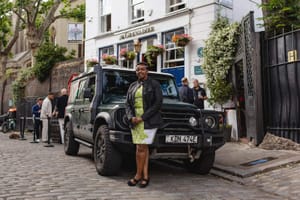
Becky Kim and Bonnie Koko drove a stock INEOS Grenadier Trialmaster 28,254 miles from Cape Agulhas to Nordkapp to London in 122 days. What the run means for weekend overlanders.
When Kenyan adventurer Becky Kim finished her 28,254-mile Cape-to-Cape drive outside The Grenadier pub in London on June 12, 2026, she walked 122 days backward through six deserts, two oceans, and every latitude between the southern tip of Africa and the Arctic Circle. Her co-driver and navigator was Bonnie Koko. Her vehicle was a stock INEOS Grenadier Trialmaster — not a one-off expedition build, not a factory-backed race truck. The same four-wheel-drive you or I could order through a dealer this afternoon.
It is, depending on your point of view, either the most audacious stock-vehicle expedition in recent memory, or the most reasonable argument that overlanders who already own a Grenadier — and that is a growing crowd in the Pacific Northwest — have been carrying the right tool for years and didn't know it.
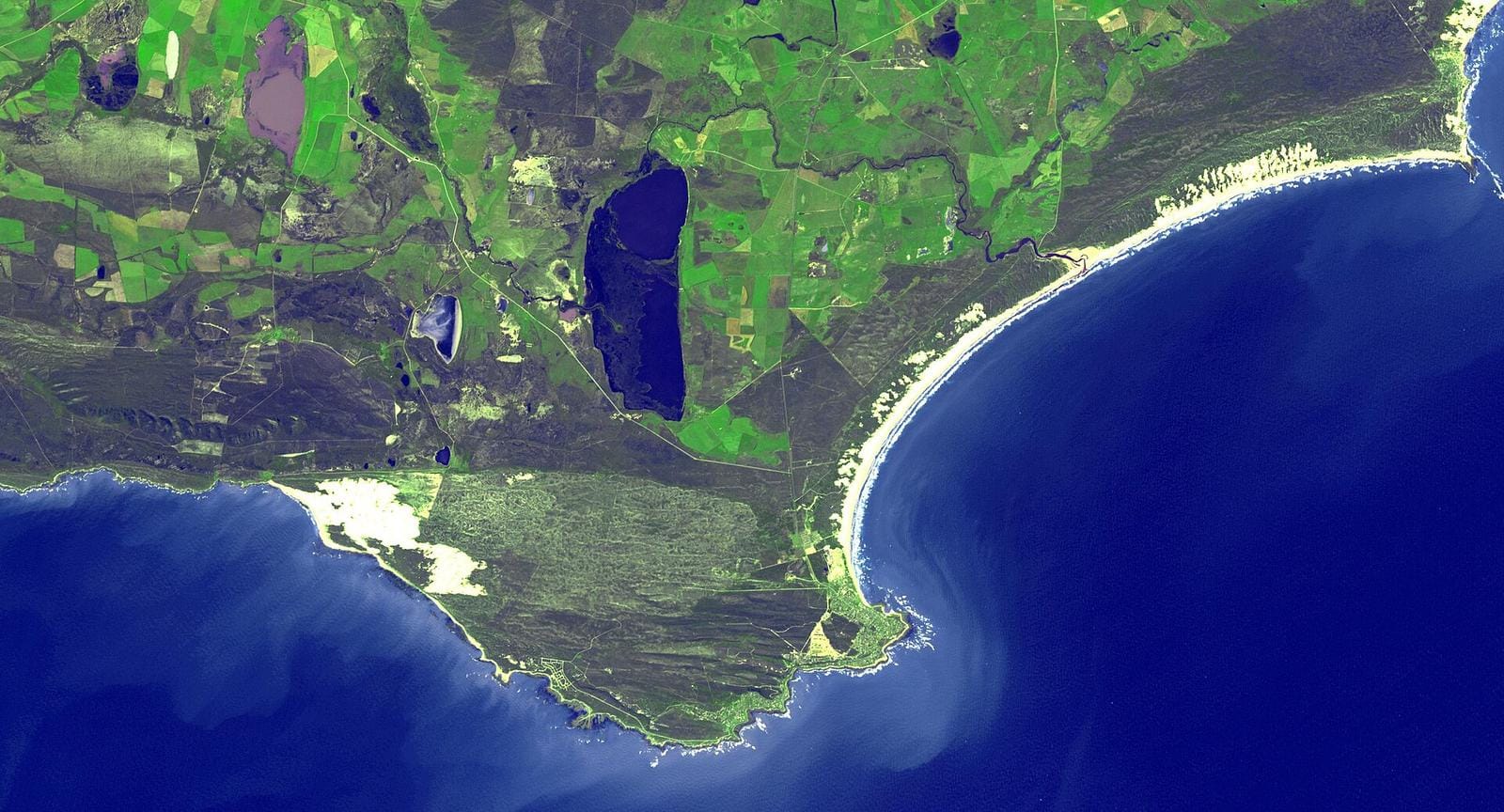
The Route: Cape Agulhas to London
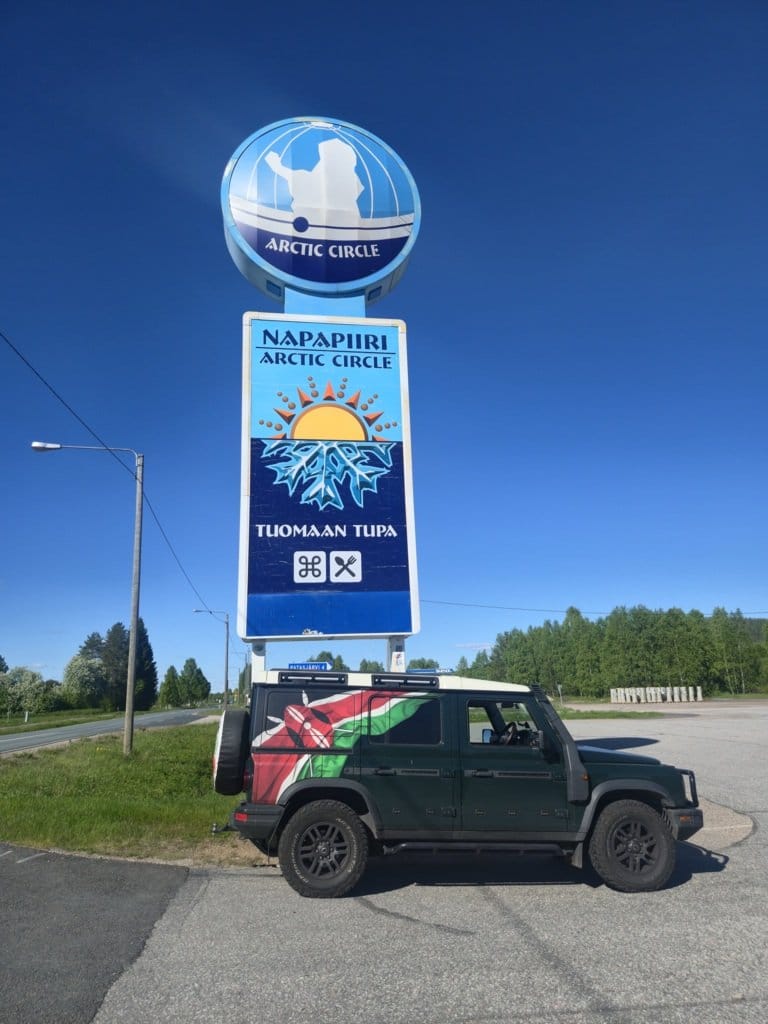
Kim and Koko departed Nairobi on February 13, 2026. They didn't drive straight north. Their route first carried them south to Cape Agulhas, South Africa— the southernmost point on the African continent and the conventional starting line for Cape-to-Cape expeditions. From there they turned north, followed Africa's western coast, crossed into Europe, and continued to Nordkapp, Norway, the northernmost point in Europe accessible by road.
That southern detour is not a quirk. It is the convention. The Cape-to-Cape is defined as Cape Agulhas (the African southernmost) to Nordkapp (the European northernmost), and the route is bound by the geography. A direct line from Nairobi to Nordkapp is not a Cape-to-Cape. The route has to touch both capes or it does not count, which is why Kim drove 12,000 miles south before she drove 16,000 miles north.
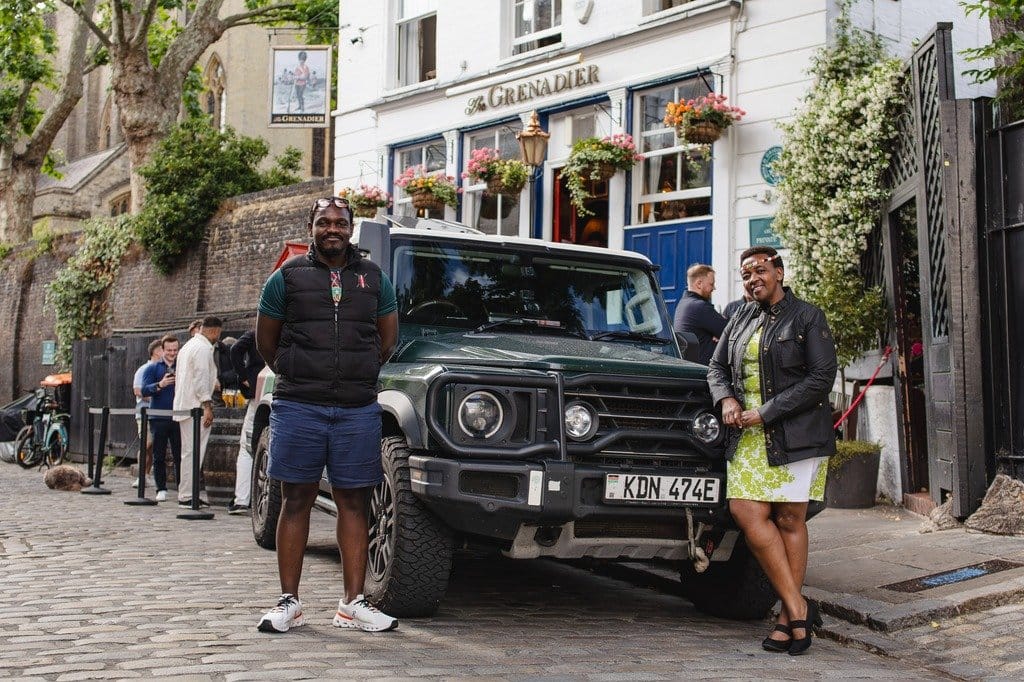
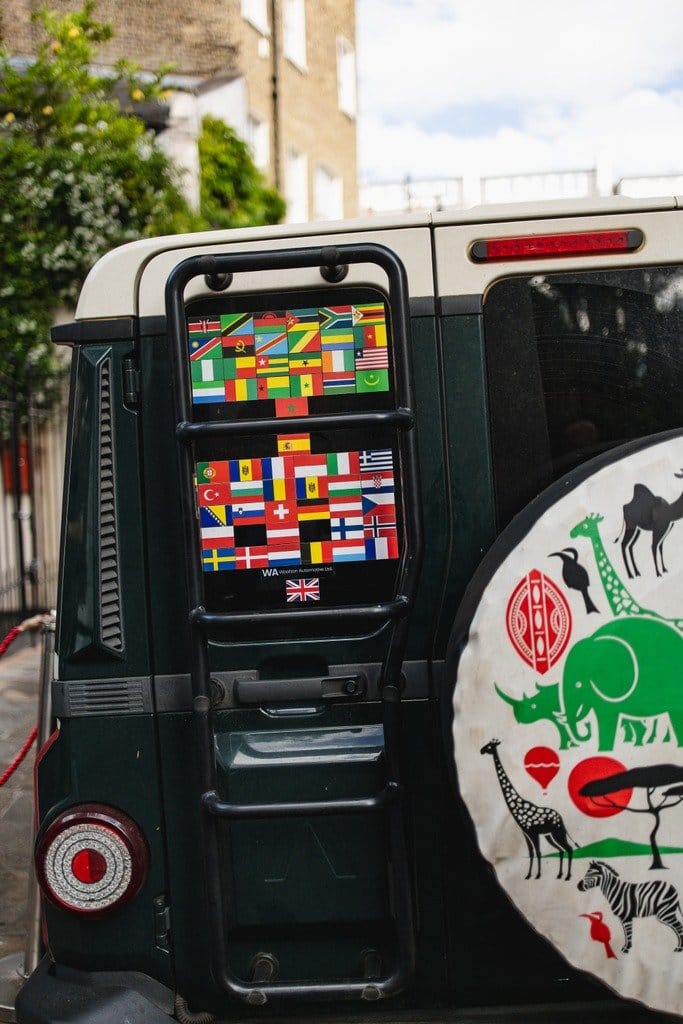
After reaching the Arctic Circle, the travelers pointed the Grenadier south once more. Their final destination was outside The Grenadier pub in London — a small, real-world acknowledgment of the brand that built the truck. The pub is named after a different Grenadier (the Duke of Wellington's regiment), but the brand chose it anyway, and Kim's finish-line photo is one of the more honest product-marketing images I have seen in a long time. Each country visited on the expedition was marked with a flag on the rear glass. The final ensemble, photographed at the finish line, is the most honest record of the trip that any photographer could have made.
The Rig: A Stock INEOS Grenadier Trialmaster
This is where the story gets interesting for the rest of us. The Grenadier Kim drove is not a one-off factory special. According to Overland Expo Compass, the truck was "largely the same vehicle customers can purchase from a dealership."
The relevant list of what it had on board from the factory:
- Three locking differentials (center, front, rear)
- Raised air intake for dust and water fording
- BMW B57 diesel engine
- BFGoodrich All-Terrain T/A KO2 tires
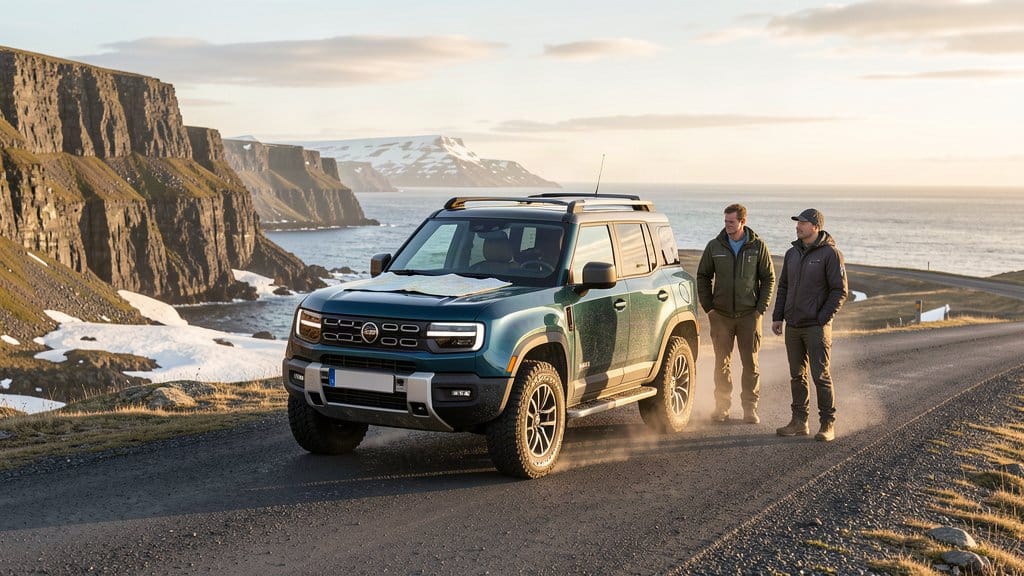
That is it. No portal axles. No long-range fuel tank. No roof rack with a spare tire carrier welded on by the dealer. No expedition-grade communications stack. No winch on the front. The truck that crossed the Sahara and the Arctic Circle in 122 days is what you would get if you walked into a Grenadier dealership and ordered the Trialmaster trim.
If that paragraph above sounds like a stock-spec checklist, that is the point. Every one of those four items maps to a real off-road requirement in the Pacific Northwest, not just a Sahara crossing. The three locking differentials matter as much on a wet Two Track in the Ochoco National Forest as they do in the Namib. The raised air intake is the difference between a dusty Cascade summer trip and a stranded vehicle when the caravan ahead kicks up a wall of silt on the road to Crater Lake National Park. The BFGoodrich All-Terrain T/A KO2 tires are the same tire you would want on a truck that commutes through Seattle and does the Mount Hood National Forest on weekends.
What the Grenadier Actually Did
On the road
It is worth pausing on what a "stock" expedition vehicle means in practice, because the answer is more interesting than the marketing copy suggests. Overland Expo Compass described the run this way:
"Rather than relying on an extensive support crew or heavily modified vehicle, Kim and Koko navigated using traditional maps and completed the drive without expert intervention. Their Grenadier Trialmaster was also largely the same vehicle customers can purchase from a dealership."
The route crossed environments ranging from the Kalahari, Namib, and Sahara deserts to the cold conditions of northern Scandinavia. That is not a single climate challenge. It is a continuous mix of heat-soak dust loading, sand ingestion risk, sub-zero oil viscosity, and arctic-grade fuel quality issues. The stock raised air intake on the Trialmaster is the single most important feature on the truck for that reason — it puts the engine air source above the wheel-line in deep sand, which is the difference between crossing a dune face and stopping on it with a sanded engine.

Three locking differentials on a stock vehicle is also unusual. Most factory off-road vehicles sold in the United States give you a rear locker and call it a day. The center diff lock is the one that matters on a long expedition — it forces the front and rear axles to turn at the same speed regardless of surface grip, which is what lets a heavy vehicle pull away from a soft stop in a desert wash without the electronic nannies deciding for the driver.
In Kim's words
Kim's own summary, in her words from the Overland Expo interview:
"I can truly testify that INEOS have built the Grenadier to last a lifetime of adventure. I like to call it 'The Wagon of Wonder'. From the BFGoodrich tyres to its overall capability, it copes tremendously. The car draws interest wherever it goes and I'm very grateful for the support from Jack at Wootton Automotive in Kenya (the supplying dealer) and Gilles (INEOS Automotive's Business Manager in Africa)."
The Wootton Automotive and INEOS shout-out is not filler. It is an honest acknowledgment that on a 122-day run through more than 60 countries, the dealer network that can pick up a phone and route a part or a service is part of the rig. That is also true of every overland rig you have ever owned, even at weekend scale: the reason a Tacoma or 4Runner holds its value better than a comparable SUV is not the truck; it is the dealer network. Kim and Koko leaned on Wootton Automotive and INEOS for the same reason.
The Numbers: Cape-to-Cape by the Data
Some context for what Kim and Koko actually did, because the numbers help:
- {Distance:} 28,254 miles, end to end, with the south-then-north route that doubles the trip back through Europe to a celebratory pint at The Grenadier pub.
- {Time:} 122 days, February 13 to June 12, 2026.
- {Countries:} 60+.
- {Deserts crossed:} Kalahari, Namib, Sahara.
- {Vehicle:} Stock INEOS Grenadier Trialmaster, dealer-delivered, no factory modifications.
- {Co-driver:} Bonnie Koko, navigator.
- {Navigation:} Traditional paper maps. No satellite messenger reporting. No published fleet support.
By comparison, the longest amateur overland route in the lower 48 — the TransAmerica Trail — runs 7,163 miles end to end. Kim's run is roughly four TransAmerica Trails back to back, and most of it on surfaces that are not a US Forest Service 5000 road.
What is interesting is the average speed. The TransAmerica Trail, with the softest possible off-pavement targets a 2025 Subaru Crosstrek Wilderness can handle at 11 to 12 hours a day, averaged about 25 mph for the trip. Kim's run, with the Grenadier's 282 hp BMW diesel running two-up with full supplies through six deserts, was almost certainly faster on road sections but slower through deep sand and rocky high-altitude passes. A rough estimate puts the trip's average somewhere between 30 and 40 mph including stops — which means the truck spent roughly 800 hours on the move 122 days.
The First-of: Kim as First Kenyan Woman to Drive the Route
Why it matters
Kim is believed to be the first Kenyan woman to drive the route from Cape Agulhas to Nordkapp. That is a record that does not show up on a spec sheet, but it is the one that matters when the next generation of African overlanders is researching what is possible. The Cape-to-Cape has been driven before, but not by a Kenyan woman, on a stock truck, with a female co-driver navigating with paper maps.
It is worth saying this plainly because it does not need to be hedged. The point of Cape-to-Cape expeditions, and the reason the Overland Expo Compass editorial team reached out for the interview, is that the route keeps producing new records as the overland community grows globally. The "stock vehicle" angle is what makes this one special. Previous Cape-to-Cape runs have used heavily modified trucks, sometimes with manufacturer support. Kim used what the Kenyan INEOS dealer gave her.
If you read the overland press with any regularity, you will recognize the shape of the records. First woman from country X to cross country Y by truck. First father-daughter team on the Pan-American. First solo crossing of the Sahara in a fully electric vehicle. The records matter because each one opens a door that the next person walks through. Kim and Koko just opened one.
What This Means for a PNW Weekend Overlander
This is the part of the story I am interested in, and it is why it is worth a Whiskey 7 Backroads post rather than a Compass cross-link.
If you live in the Pacific Northwest and you already own or are considering a Grenadier, Kim's run is not aspirational. It is instructive. Three things the Cape-to-Cape tells you about weekend overlanding in the Methow, the Ochocos, or the Wallowas:
One: the spec sheet is more honest than you think. The features that matter for an expedition vehicle — locking differentials, raised intake, diesel torque at altitude, a body-on-frame chassis that does not give up after 80,000 miles — are also the features that matter on a wet weekend on a Forest Service 5000 road in October. The Grenadier is built like a Land Rover Discovery 1 because that build pattern works in 2026, not because it is nostalgia.
Two: the dealer network is part of the vehicle. Kim named her supplying dealer and the INEOS Africa business manager by name in her published interview. On a Cape-to-Cape run, that matters because the truck is going to see things the dealer has never seen. The dealer picking up the phone is what makes the next leg possible. That logic applies to a PNW overlander too — the difference between a brand with a service network and a brand without one is the difference between a weekend trip that gets back and one that does not.
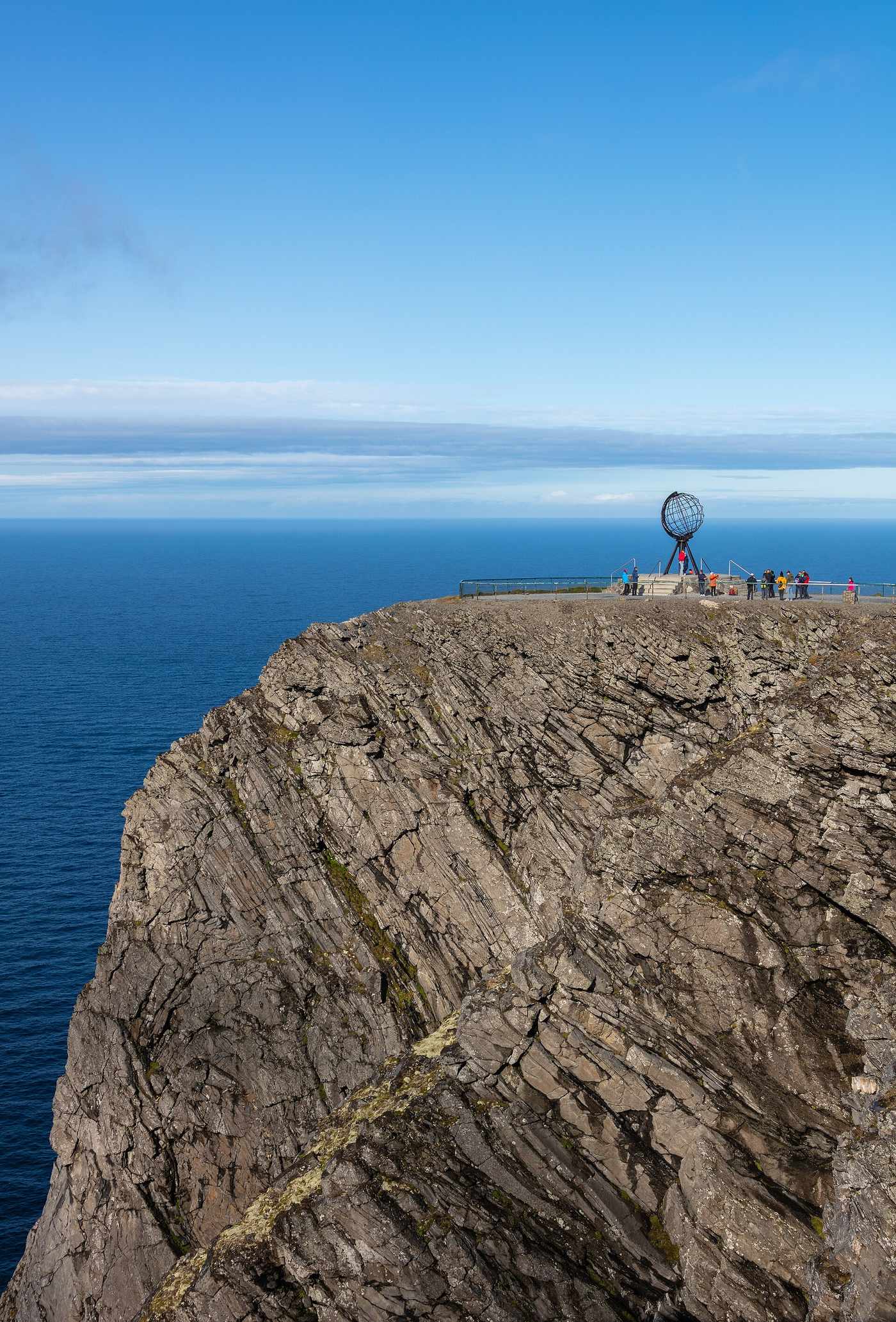
Three: the route is the message. Kim chose Cape-to-Cape because the geography is the point. Cape Agulhas to Nordkapp is roughly 12,000 miles as the crow flies, and roughly 28,000 on the road because the route has to actually be possible in a stock 4x4. That is the same constraint a PNW overlander faces when planning a trip up the South Fork of the Hoh, or through the Badger Creek Two Track, or across the Blue Mountains. The geography decides. The vehicle has to fit the geography, not the other way around.
The geography-first rule plays out in the actual W7BR archives. The 7,163-mile TransAmerica Trail piece that we published in June is the soft-road version of the same principle. Andy and Mercedes Lilienthal drove a 2025 Subaru Crosstrek Wilderness the slowest, longest way across the country because the geography had to come first, then the rig. The Backcountry Offroad Expo La Pine recap from July is the practical PNW companion: which rigs to walk up to at an Expo booth, and which ones do not need a conversation. Kim's run is the same idea, with more zero, and a Stock Grenadier instead of a soft-roader Subaru.
The Lesson: Stock Rigs Still Work
The PNW weekend version
The clearest lesson from Kim's run is not about the Grenadier. It is about the standard American overland tendency to overbuild a vehicle before it has earned a single trail mile.
Most PNW overlanders I know have at least one aftermarket part on their rig that was bought before the rig had its first flat tire. A roof rack with a light bar. A winch that has never been winched. A suspension lift with shocks that get used twice a year. Those are not bad purchases on their own. But the pattern they fit into —build the rig first, drive the rig later— is the opposite of what Kim did. Kim bought the rig, loaded the maps, pointed the truck south, and resolved the rest along the way.
If you want to take the Cape-to-Cape lesson home, here is the version that works on a weekend trip. Take your rig out as it sits. Drive it somewhere you have never been. Use paper maps. Find out what breaks. Fix what breaks. Repeat. You do not need a $5,000 lift to learn what your truck can do, and you do not need a six-month expedition to find out what your camping setup is missing.
Becky Kim and Bonnie Koko made it from Cape Agulhas to the Grenadier pub in 122 days, in a stock truck, on traditional paper maps, without expert intervention, without a manufacturer support team, and without a fleet of chase vehicles. The route is not repeatable for most of us — your boss probably will not give you four months off — but the principle is. Take the rig you have, drive it as far as you can, and see what is left to fix when you get home.
If Kim and Koko are invited to Overland Expo Mountain West in Loveland, Colorado the weekend of August 21 to 23, the live version of this story will be on the main stage. If they are not, the second best version is this one: the story of a stock truck, a paper map, and a route that the dealership never saw coming. And if you read this in the PNW this weekend, the third best version is the one you take out of your own driveway tomorrow morning.
What a great adventure. Get out there and enjoy the backroads.....
About the Author
Brent Conklin
Owner of Whiskey7backroads and avid explorer. I am a Ham Radio extra class operator and frequent the Old Miss Net. I have been married for 37 years to Cheryl and we have 2 boys and 2 dogs.