

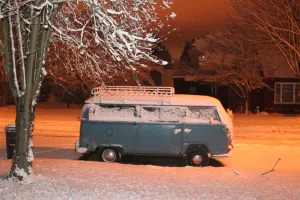
How diesel air heaters work, what they burn and draw overnight, where they struggle, and what the safety reports say, for vans, truck campers and trailers.
Twenty degrees, twice. A Four Wheel Camper owner posting on Wander the West describes "a couple of trips with 20 deg nightly temperatures" in his 2013 Hawk, and running out of propane on both of them. So he pulled the factory propane heater and put in a Webasto that burns diesel instead. That small story is a good part of the case for diesel heaters for campers. In a diesel rig, the fuel is already on board and the heater uses very little of it. A small propane supply, as he found twice, can run out.
Diesel heaters "have become tremendously popular for winter camping over the last five years or so," as one truck camper owner wrote in Outside. They're also sold for very little money, and that is where the questions start. How much fuel do they really burn? How hard are they on a battery? What happens at 9,000 feet? Are the cheap ones safe?
This isn't an owner's diary. What follows comes from the makers' own data sheets and manuals, a United Nations vehicle regulation, US and UK safety agencies, and two owners who wrote up what they did. Where a number comes from somebody selling heaters, their name is on it.
How a diesel heater works
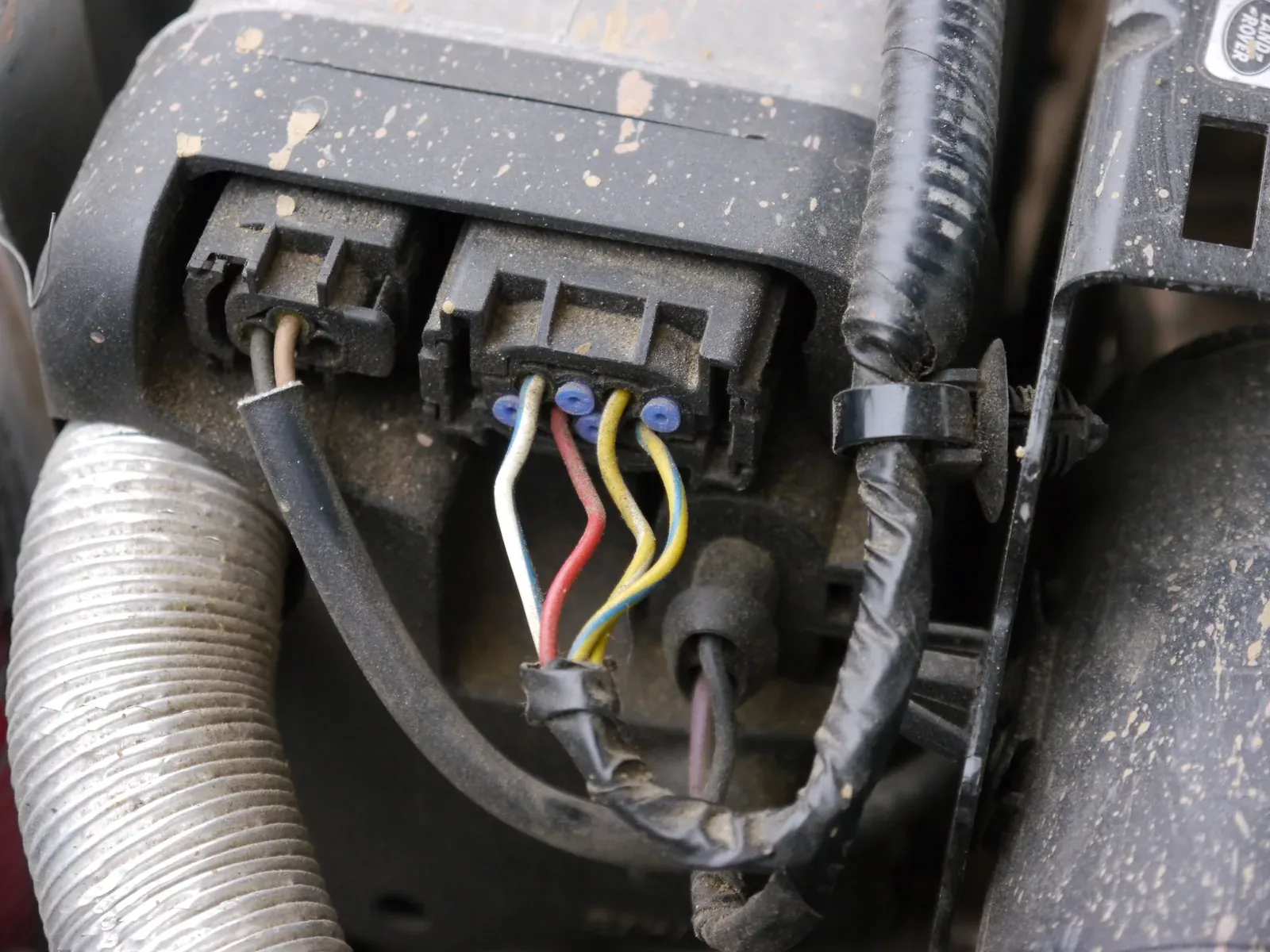
A diesel air heater is a small burner in a box. A metering pump feeds fuel into the burner, combustion air comes in from outside, and a blower pushes air from the living space across the hot heat exchanger and back into the camper. Webasto's data sheet for the Air Top 2000 STC describes it as an "air heater with evaporator burner." Autoterm puts it plainly: the incoming air "is mixed with fuel, which is delivered by a metering fuel pump to form the air-fuel mixture."
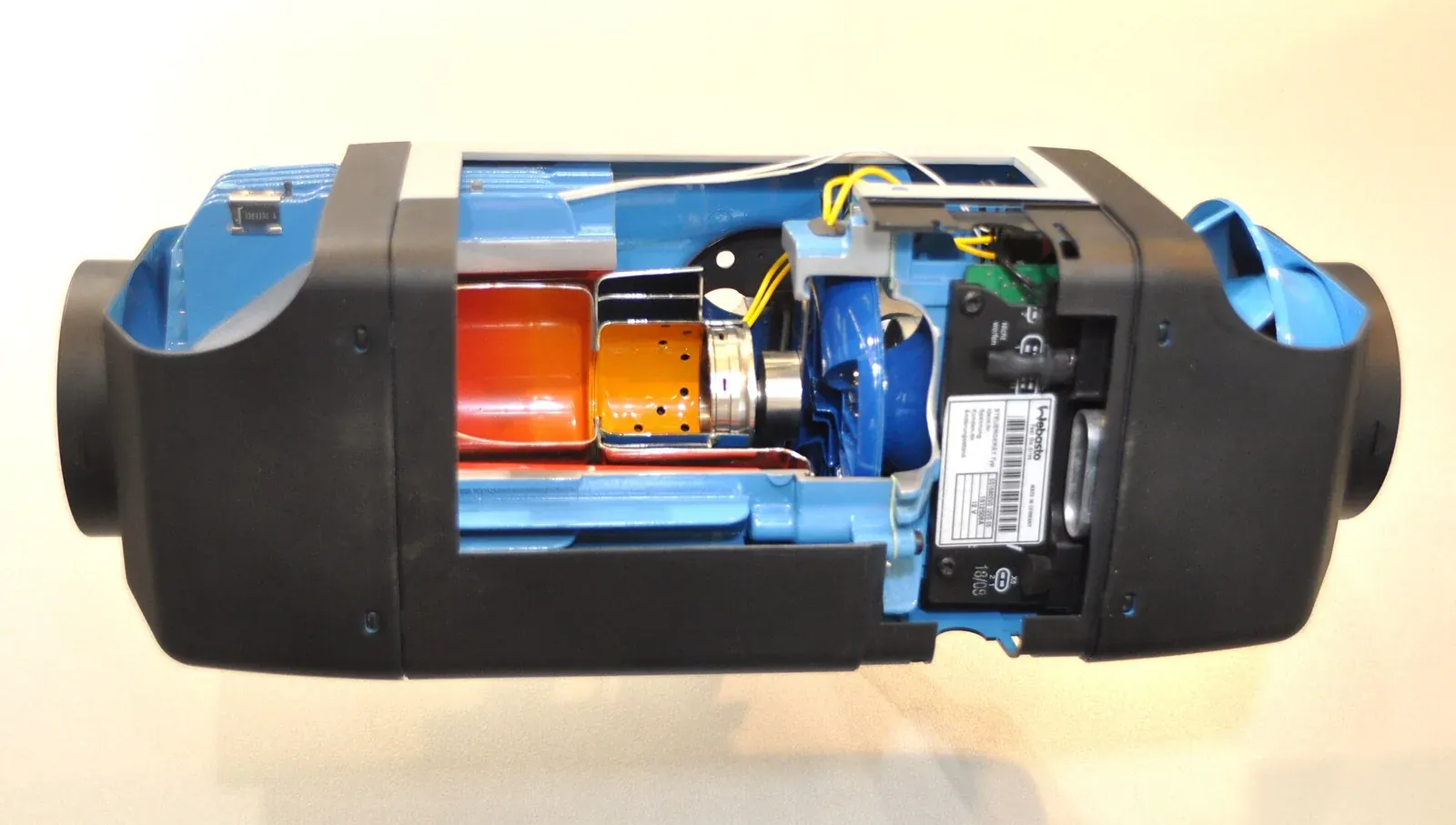
The part that matters most is that there are two separate air paths. The European type-approval rule for vehicle heaters, UN ECE Regulation 122, says "the air for the combustion chamber of the heater must not be drawn from the passenger compartment of the vehicle." The exhaust outlet "must be located so as to prevent emissions from entering the vehicle through ventilators, heated air inlets or opening windows." Keep the combustion air and exhaust separate from the air you breathe. A lot of what follows comes back to that one idea.
The same regulation requires a delayed shut-off on the combustion air blower, "even in the event of overheating and in the event of interruption of the fuel supply." So when you switch one off and the fan keeps running for a while, it is supposed to do that, and it's part of the design rather than a fault. Some heaters also cycle on a thermostat instead of running flat out. Autoterm says its Air 2D "runs until the temperature reaches 1°C above the set point, then shuts off and ventilates until it drops 2°C below, before resuming to heat."
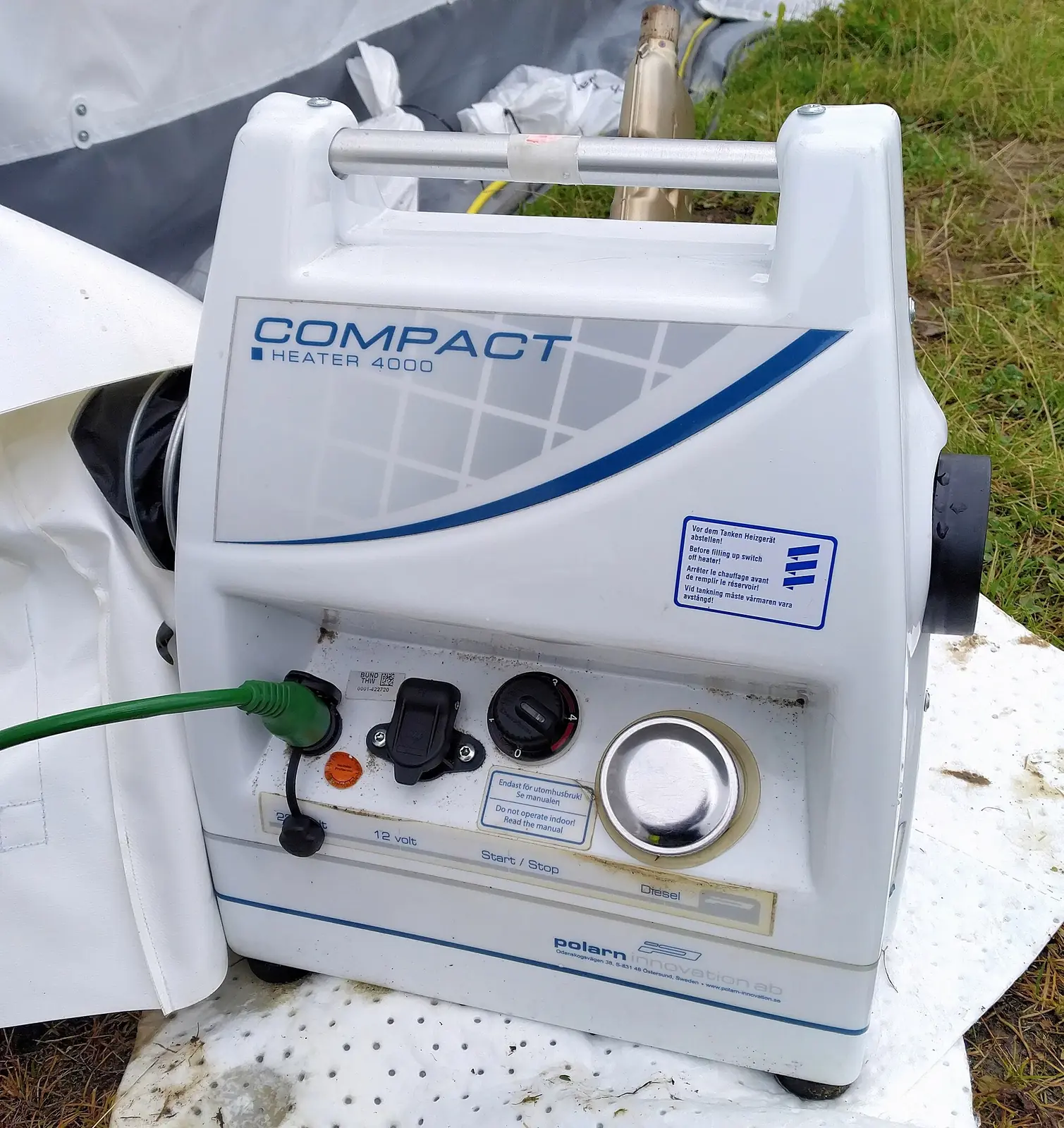
Brooklyn Campervans, a van builder that installs these, sums up the result: a diesel air heater "draws fuel from your van's tank, burns a small amount of diesel, and blows heated air into the living space," with the combustion gases "vented outside through an exhaust pipe." They add that this means "no fumes, no moisture, no carbon monoxide inside the van" for their builds. That's a seller's promise, and it only holds when the installation is right.
Air heater, coolant heater or combi?
Not every diesel heater blows warm air. There are three families, and they solve different problems.
Air heaters are the ones most campers mean. According to ATC, Eberspächer's Canadian distributor, Airtronic air heaters "are independent of both the engine and of the vehicle's own heat balance" and "warm the air directly." Mount one, run a fuel line, an exhaust and an intake, and duct the warm air where you want it.
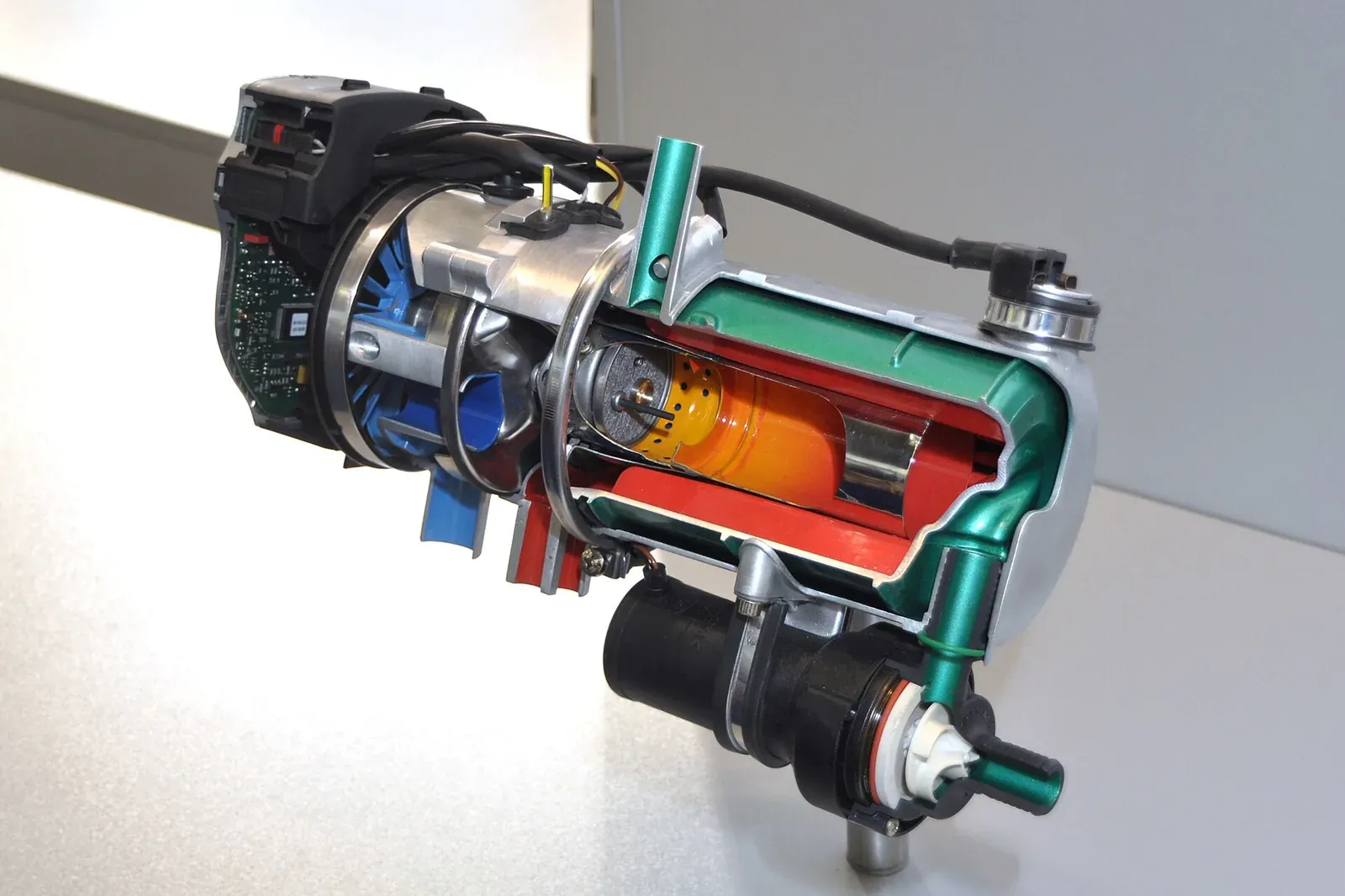
Coolant heaters, which Eberspächer calls Hydronic, work through the engine instead. They "are integrated in the cooling system of the engine," ATC says. The heat "is then distributed through the vehicle's own heat exchanger as forced hot air," and "the engine is warmed up with the residual heat in the cooling water." Webasto sells its Thermo Top Evo as a "Coolant Heater for Engine Preheating," and the Thermo 90 S manual calls that unit a "Water Heater." If you want a warm engine on a cold morning as well as a warm cab, this is the family to look at.
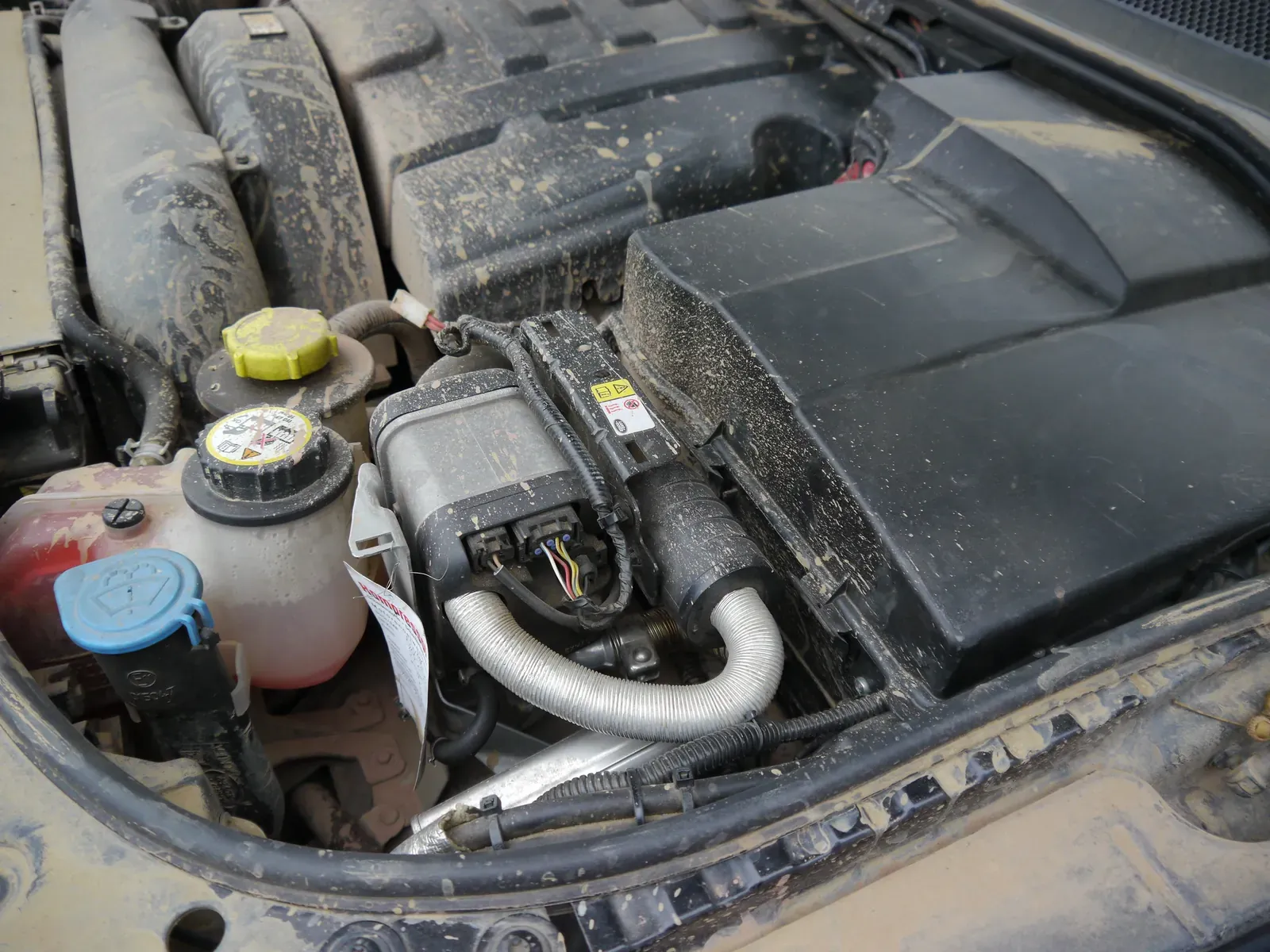
The third family is the combi, which heats the living space and a tank of water. The Truma Combi D 4 E is a good example from the European motorhome world. Truma lists diesel heat output of 1,000 to 4,000 watts, fuel use of 0.1 to 0.4 liters (about 0.03 to 0.11 gallons) an hour, a 10-liter (about 2.6-gallon) water container, and a 12-volt draw of 0.4 to 8.1 amps for the heater and water container. It also has electric elements, so on a campsite with 230-volt hookup it can run without burning fuel at all. Truma says the diesel version "reliably heats the vehicle while driving."
In my view, most van and truck camper owners want the simple one, an air heater. A coolant heater earns its extra plumbing when engine preheat matters to you, and a combi makes sense when you also want hot water from the same fuel.
What it burns and what it draws
This is where the numbers are friendlier than most people expect. Here is what the makers publish for two common 2-kilowatt air heaters and one combi. These are examples to compare, not a sizing guide.
| Heater | Heat output | Fuel use | Electrical draw |
|---|---|---|---|
| Webasto Air Top 2000 STC (diesel) | up to 7,000 BTU/h (0.9–2.0 kW) | 0.03–0.06 gal/h (0.12–0.24 L/h) | 15–30 W |
| Eberspächer Airtronic D2 | about 2,900–7,500 BTU/h (850–2,200 W) | about 0.026–0.074 gal/h (0.10–0.28 L/h) | 8–34 W running, up to 100 W starting |
| Truma Combi D 4 E | about 3,400–13,600 BTU/h (1,000–4,000 W) | about 0.026–0.11 gal/h (0.1–0.4 L/h) | 0.4–8.1 A at 12 V |
Sources: Webasto Air Top 2000 STC, Eberspächer Airtronic D2 data sheet, Autoterm Air 2D, Truma Combi D 4 E. The BTU and gallon figures for the D2 and the Combi are my conversions (3.412 BTU/h per watt, 3.785 liters per gallon). Autoterm lists 0.10 to 0.24 liters (about 0.026 to 0.063 gallons) an hour for its Air 2D, but I didn't find its output and power draw on the page I read, so it's left out of the table.
Fuel overnight
Take the Airtronic D2 because its data sheet lists every setting. On medium, it burns 0.15 liters an hour, so a 10-hour night is 1.5 liters, about 0.4 US gallons. On its top "power" setting it burns 0.28 liters an hour, which is 2.8 liters, or about three-quarters of a gallon, over the same night. Those are constant-setting examples. Real use depends on the setting and how long the heater runs, and on low it burns less than either.
Bigger heaters burn more. Bryan Rogala, testing heaters in his truck camper for Outside, said the 5-kilowatt diesel unit he used "uses about a gallon of fuel per night." Brooklyn Campervans quotes 0.06 to 0.14 gallons an hour for the larger Webasto it installs.
Battery overnight
The fan, pump and electronics run off 12 volts. The Airtronic D2 draws 8 watts on low, 12 on medium and 34 on its top setting, which works out to roughly 0.7 to 2.8 amps. A 10-hour night on medium is about 120 watt-hours, around 10 amp-hours at 12 volts. Flat out, it is about 340 watt-hours, around 28 amp-hours. Those are running-load estimates that leave out the start-up draw.
For scale, W7BR's Starlink Mini piece puts the Mini at 25 to 40 watts. A D2 on medium draws less than a Starlink Mini.
Two catches. Starting is the hungry part: the D2 sheet lists up to 100 watts "while starting," about 8 amps, while the burner lights. And there is a floor. The D2's undervoltage protection "switches off the heater on reaching the voltage limit," about 10.5 volts on a 12-volt system. A tired battery on a cold night can shut the heat off right when you need it most. Is your house battery sized for the heater and everything else you run overnight?
Diesel, propane or a Buddy?
Many RVs and caravans already heat with propane. The question is what diesel changes.
Start with the small portable propane heaters, because that is where the real safety difference lives. Rogala tested a Mr. Heater Little Buddy (3,800 BTU) and its bigger brother, the Buddy, which "puts out up to 9000 BTUs" but burns "just 2.4 hours on a one-pound cylinder of propane when running on high." His summary of the type: "Such propane heaters don't have any way to vent exhaust, so all the byproducts of combustion, including carbon monoxide (CO), fill up the space they're heating." He also "wound up with condensation on the walls of the camper" after using them. With the diesel heater running outside his camper, he wrote, "I haven't experienced any condensation inside the camper when using this heater."
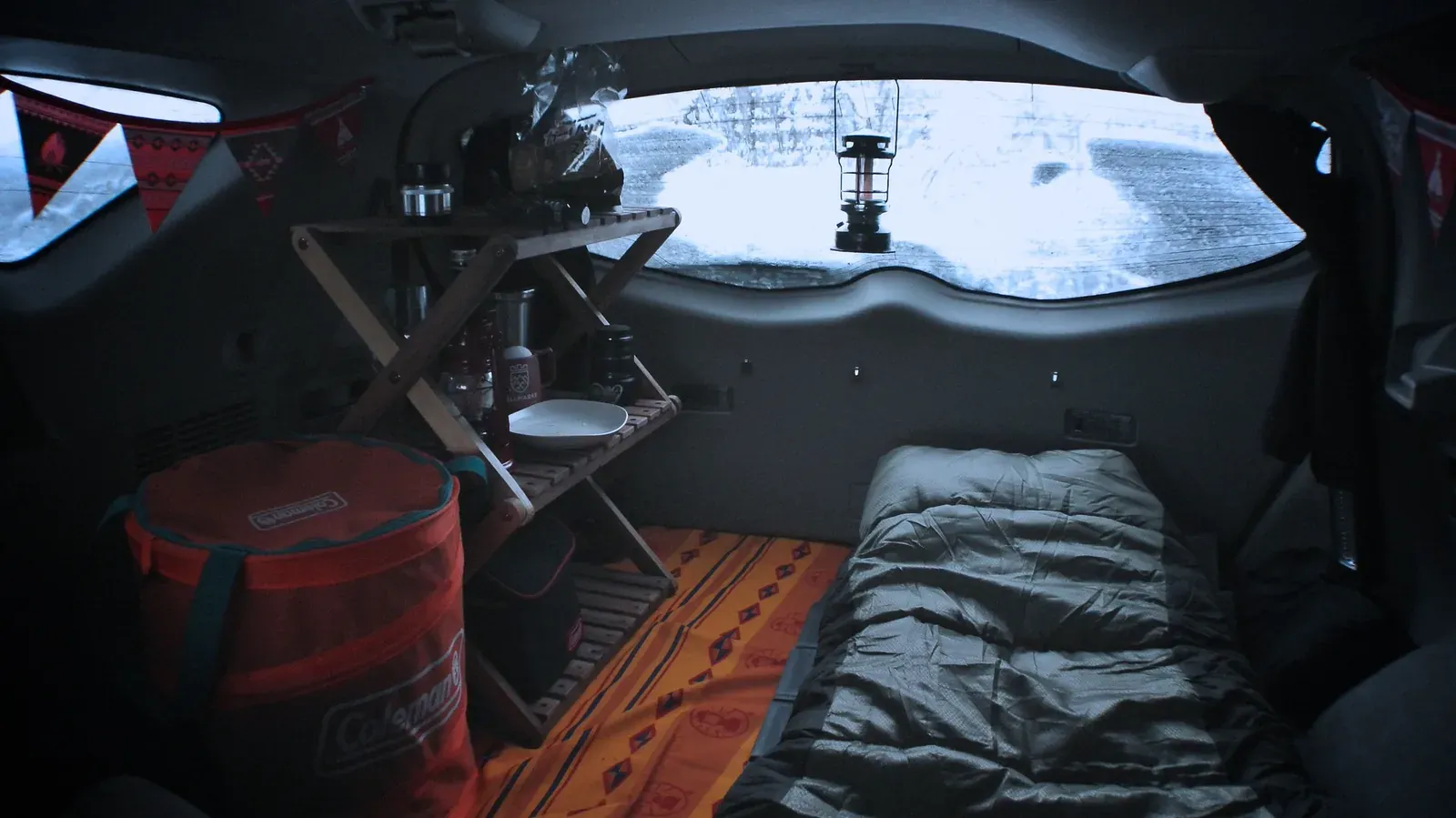
The moisture is not a guess. The Pacific Northwest National Laboratory's building guidance says unvented combustion appliances produce "1 gallon of water vapor for every 100,000 Btus." By that rate, a Buddy on high puts roughly 0.09 gallons of water into your camper every hour. In a small, cold space, that water ends up on the windows and walls.
There are legal limits, too. Mr. Heater's own FAQ notes that under Canadian law and under Massachusetts law, "unvented heaters are prohibited from use indoors." The US Consumer Product Safety Commission's camping safety alert says it is aware of at least 12 deaths since 2020 from carbon monoxide "associated with camping equipment," and tells people: "Do not use fuel burning portable heaters or lanterns while sleeping in enclosed areas such as tents, campers, and other vehicles."
Vented propane furnaces are a different thing, and they are not the villain here. The Hawk owner's factory heater was a propane unit, and Truma still calls gas heaters "the first choice for many caravan and motor home owners for years." The honest case for diesel over a vented propane furnace is fuel logistics. I haven't found a matched test of the two on fuel or battery use, so this isn't an efficiency verdict. Truma's own guide says its diesel heaters "use fuel directly from the vehicle tank" and suit "tours through countries with poor gas infrastructure." The Hawk owner put it more simply. He kept running out of propane.
What if your rig runs on gas?
If your van or pickup burns gasoline, a fuel-fired heater still works. You have two choices to make first.
The first is a heater built for gasoline. Webasto's data sheet lists the Air Top 2000 STC in a petrol version that runs on EN 228 gasoline, with 1.0 to 2.0 kilowatts of output and 0.14 to 0.27 liters an hour of fuel use. Eberspächer's distributor says its Airtronic and Hydronic heaters cover "GAS or DIESEL applications." Ask for the gasoline version by name. Don't assume.
The second is a separate diesel supply, a small tank or a can. Rogala called this "the biggest downside to a diesel heater," that "unless you drive a diesel rig, you need to carry an additional fuel source with you." He decided the dry heat was worth it.
Either way, mind the pump. Webasto's operating instructions say its heaters "must be switched OFF when re-fueling at filling stations." Regulation 122 requires a notice at the fueling point saying the heater must be shut down before refueling. It is an easy habit to build, and an easy one to forget on a cold morning.
Altitude: where heaters start to soot
Thin air changes the fuel-to-air mix. Too much fuel for the oxygen available means incomplete burning, soot, and in the worst case, more carbon monoxide.
Heatso, an Espar dealer, says that running a diesel or gasoline heater "at over 2,200 meters / 7,500 feet can lead to choking," with "deposits of soot and debris building up." Espar's answer is a High Altitude Kit with "an inbuilt air pressure sensor" that "automatically adjusts the oxygen and fuel mixture." Heatso lists it at $239.99 and says it fits Airtronic D2, D4 and D5 heaters with a silver H-kit label. Older units without that label need a new control unit first.
Newer heaters build the compensation in. Webasto says its Air Top Pro 25 is "altitude-ready up to 5,500 m and delivers maximum heating performance up to 3,000 m thanks to automatic altitude adjustment." That is about 18,000 feet and 9,800 feet. Autoterm says its Air 2D has a "high altitude sensor which allows it to heat in altitude up to 4200m," about 13,800 feet. Brooklyn Campervans claims "most Chinese heaters aren't altitude-rated" and that above 5,000 feet they suffer "incomplete burns, soot buildup, and potential carbon monoxide issues." Treat that as a seller's claim, but check any heater you are considering for a stated altitude rating.
Altitude isn't the only cause of soot. RV Travel Notes lists restricted airflow, "low-temperature operation," "weak startup voltage, high altitude, dirty fuel, and frequent short heating cycles." And the CPSC adds one more reason to care: the risk of carbon monoxide poisoning "is increased" at high altitudes.
So, where do you actually camp? If the answer includes the high Rockies or the Sierra in shoulder season, the altitude rating belongs at the top of your list.


Cold fuel
Cold-weather fuel matters, even when the heater shares the vehicle's diesel tank. According to CHS, the fuel cooperative behind Cenex, #2 diesel reaches its cloud point, where wax crystals start to form, "when air temperatures hit 6 to 14 degrees Fahrenheit, depending on where you buy your fuel" (about −14 to −10 °C). Its product quality manager puts the result simply: "Putting fuel with wax crystals through equipment restricts fuel flow and plugs filters and fuel lines." The fix is a winter blend of #1 and #2 diesel with a cold flow improver, and CHS's rule of thumb is to switch "when overnight temperatures dip near 32 degrees Fahrenheit" (0 °C).
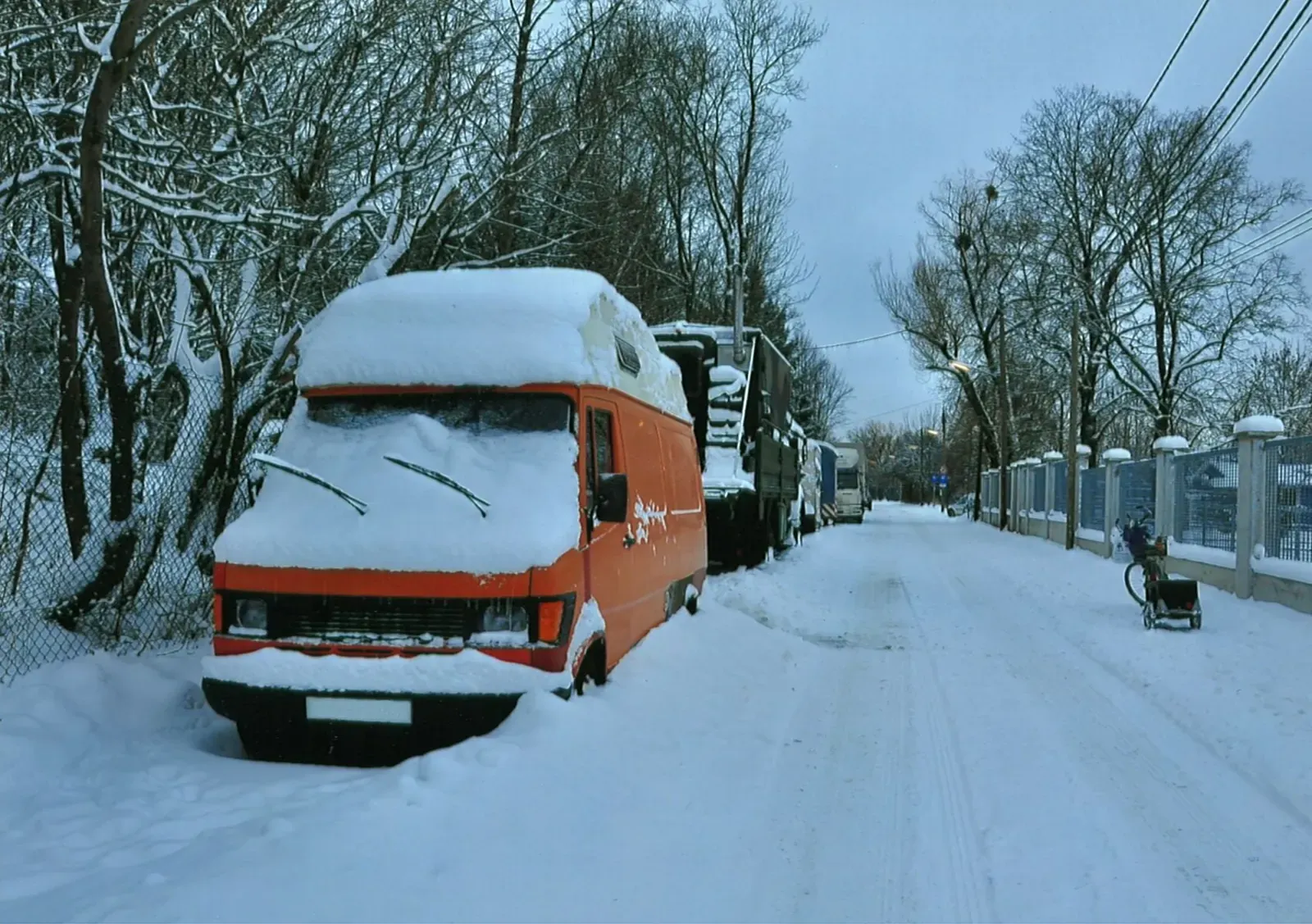

Webasto has a specific note for this. "If you change to low-temperature fuel, the heater must be operated for approx. 15 minutes so that the fuel system is filled with the new fuel." The heater's own fuel line holds summer fuel until you run it through.
Read your heater's fuel list, too, because they don't agree. Autoterm accepts "Standard diesel, Winter diesel" and says "Bio diesel is not accepted for use as a fuel." Webasto's data sheet lists the diesel Air Top 2000 STC for regular diesel, biodiesel to EN 14214 and HVO. Same job, different rules.
Cheap heaters: what the safety reports say
Search for a diesel heater and you will see two price worlds. Brooklyn Campervans says 5-kilowatt Chinese diesel heaters sell "for $150-$300," and gives them a fair hearing: "The honest assessment: they work." Its list of trade-offs is higher failure rates, more noise, weak altitude performance, no certification to automotive standards, possible insurance trouble "if it causes a fire," and an Amazon return window instead of Webasto's two-year warranty. On the other side, Brooklyn quotes "roughly $3,100" installed for the larger Webasto it fits, and $2,400 to $2,800 for an Air Top 2000 STC. A bare Espar Airtronic D2 kit for an older Sprinter lists for $1,379.95 to $1,512.76 at T1NParts, before anyone installs it.
The UK's Office for Product Safety and Standards has published at least four notices on diesel heaters sold under the Vevor name. Here they are in date order:
- January 3, 2023, product recall: "serious risk of asphyxiation" because the heater was "not supplied with adequate instructions for installation." An update dated January 11, 2024, says the product "has been recalled from end users by Vevor."
- June 30, 2023, product recall: fire and chemical risk. "It is likely the exhaust pipe will not be installed correctly and poisonous gases can escape the product and poison the user."
- August 23, 2023, product safety report: "serious risk of asphyxiation, fire and burns." The import was rejected at the border and destroyed.
- January 15, 2026, product safety report: "serious risk of suffocation" because the heater was "not supplied with appropriate safety information or instructions for use." The report adds that "diesel heaters must only be used in sufficiently ventilated spaces, without which the user is exposed to potentially fatal concentrations of carbon monoxide."
Read those closely and one thread runs through all four: missing or inadequate instructions or safety information. Two of them say the exhaust pipe is likely to be installed wrong as a result. They also list fire, burns and chemical risk, and failures against UK machinery safety rules, so the problems aren't only paperwork. None of the text I read lists model numbers. So I can't tell you whether any of them match the 5-kilowatt Vevor all-in-one that Outside picked as its "Best Diesel" at $116, which Rogala ran outside his camper.
In my view, check the product and the installation, not the price. Look up the exact model against notices like these, read its instructions before you buy, and look for approval marks; Webasto's Air Top 2000 STC data sheet, for example, lists its Regulation 122 type approval. Then think about who installs it. A good heater with a bad exhaust is dangerous, and a CO alarm by the bed backs all of that up without replacing any of it. Would you know if your exhaust joint had worked loose?
Installing one: van, truck camper or a box outside
Here is where to slow down. Webasto's operating instructions say "improper installation or repair of Webasto heating systems can cause fire or the leakage of deadly carbon monoxide leading to serious injury or death," and that "the heater may not be operated in enclosed spaces (such as garages) as a result of the risk of poisoning and asphyxiation, even if a timer is used." Webasto wants its heaters installed by trained people. Whoever does yours, the Regulation 122 basics make a good checklist:
- Combustion air comes from outside, never from inside the living space.
- The exhaust outlet sits where fumes can't get back in through vents, heated air inlets or opening windows.
- The air you heat is drawn from a clean area, away from exhaust from the heater, the engine or anything else.
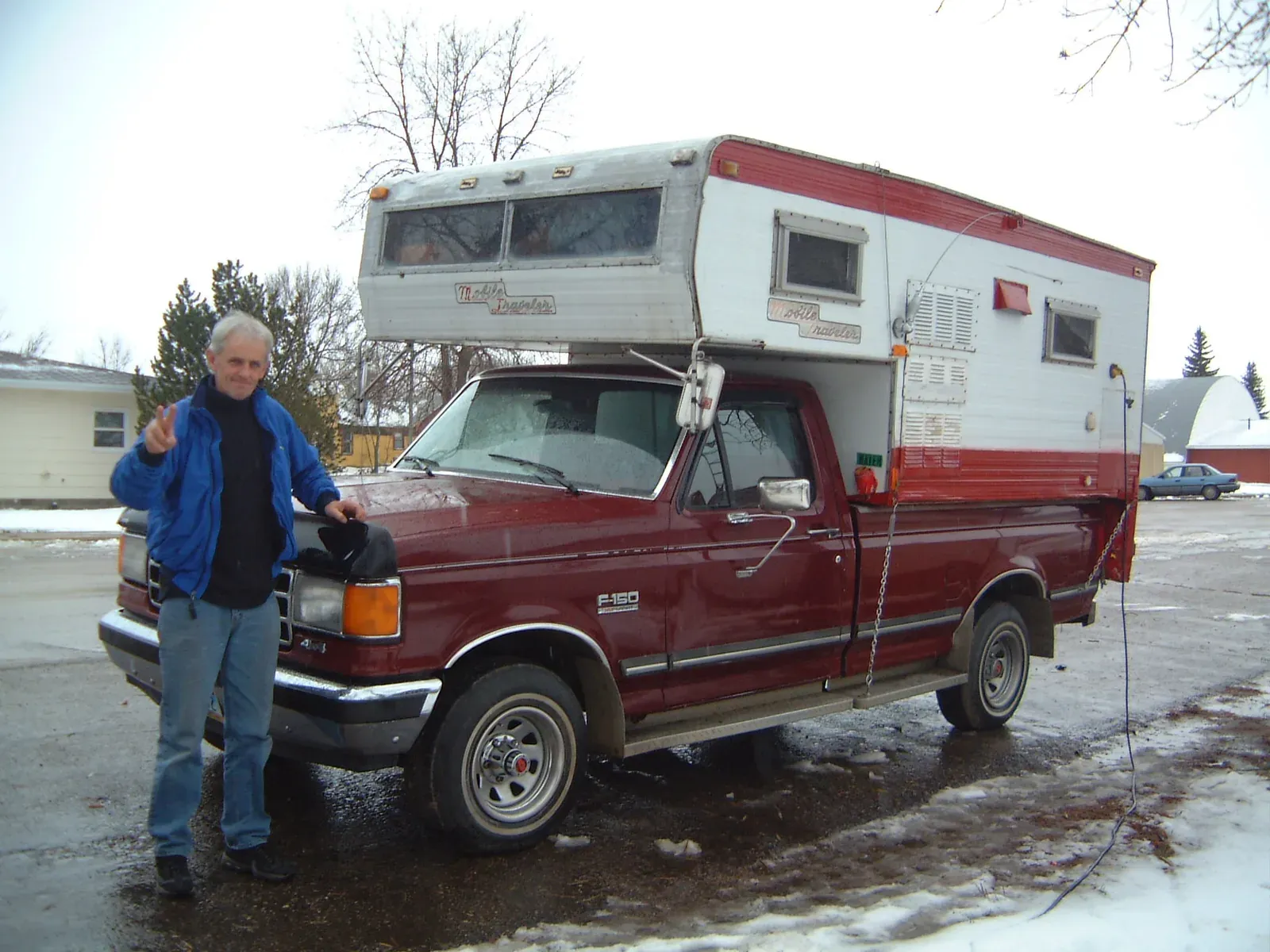
Truck campers are short on space, and the Hawk owner on Wander the West wanted his old heater space back for storage. He found room by moving the heater outside the camper entirely. His camper is mounted with a Torklift frame-mount system, which left open space under the camper where the turnbuckles usually go. The heater lives there. "Outside air under the camper is drawn in, heated and sent into the compartment." If you are shopping for a truck camper with winter in mind, W7BR's flatbed truck camper buyer's guide has the battery and winterizing questions worth asking alongside the heater one.
The other route avoids a permanent mount. Rogala's 5-kilowatt unit was an all-in-one, and "the fuel tank, heater, and all the components are housed together in a box." He set it outside the camper and ran the hot-air hose in, so "you don't have to worry about exhaust leaking inside the camper." "Temps were in the teens overnight," he wrote, and they stayed warm even though he had to rig an entry port for the hose. On high, he wrote, it kept his camper "40 degrees warmer than the ambient temperature." Outside the camper still doesn't mean exhaust can't get back in. The same logic as Regulation 122 applies: keep the box's exhaust away from the camper's vents, the hot-air intake and any open door or window, and the trade-off is a box sitting outside and a hose through an opening.
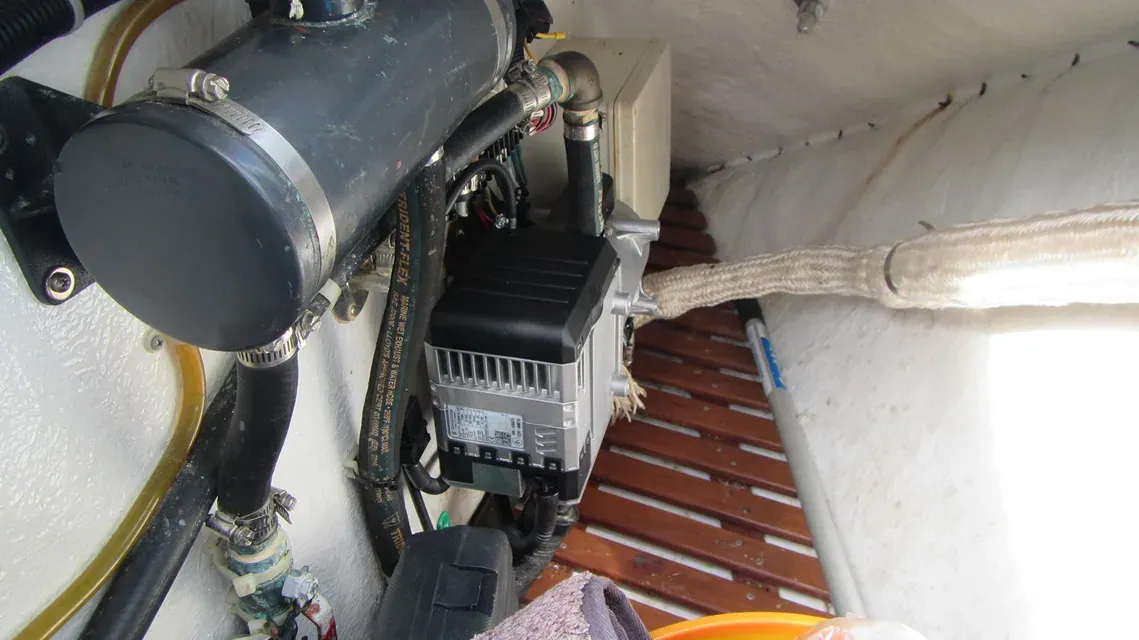
Wherever it goes, give it room. The photo above is from a boat, not a van, posted on Flickr by Mustad Marine, but the clearance point carries over. The note with it says their Espar "shares a locker with 'stuff,'" that the exhaust piping and the unit get hot, and that "we always check the heater space before turning it on." Webasto's manual says the same thing in its own words: "Keep the hot air inlet and hot air outlet free of dirt and foreign bodies. Soiled or blocked hot air lines may cause overheating."
Last, put a carbon monoxide alarm near where you sleep. The CDC gives that advice for homes, and the reason carries straight over to a camper: "People who are sleeping, drunk, or under the influence of other substances can die from CO poisoning before they have symptoms." The CDC counts more than 400 Americans killed each year by CO poisoning not linked to fires. The gas is "odorless, colorless" and "kills without warning." An alarm doesn't care which heater you bought.
Keeping it running
Diesel heaters don't like sitting idle, and each maker has its own schedule. Webasto says that "to prevent mechanical parts seizing, the heater should be operated for approx. 20 minutes once a month," and that "the heater must be checked by an expert at the latest at the start of the cold-weather period." Autoterm's version is a 30-minute run at maximum power every two weeks through the summer, plus cleaning out dust a few times a year. If you do that, Autoterm says, "no service or inspection is needed."
Follow your own model's manual on this. RV Travel Notes ties carbon buildup to things like long periods of low-temperature operation and frequent short heating cycles, which is one reason the makers want their heaters run regularly.
One more thing for anyone buying used or shopping sales. Webasto says production of the Air Top 2000 STC "has stopped," replaced by the Air Top Pro 25 with a 0.7 to 2.5 kilowatt range. Spare parts for the 2000 STC "will remain available to the usual extent beyond December 31, 2026." If you buy one, know where parts come from before you need them.
Before you buy: a short checklist
So, is a diesel heater right for your camper? The answer depends on a handful of practical points, and none of them is the brand name. Run through these first:
- Fuel: a diesel rig, a gasoline version of the heater, or a separate diesel supply.
- Power: a house battery that handles the start-up surge and a full night of fan and pump, with everything else running.
- Altitude: a stated rating that covers where you camp.
- Fuel list: your winter fuel, biodiesel or HVO on the heater's approved list.
- Install: combustion air from outside, exhaust away from vents and windows, clearance around the unit, and an installer who follows the manual.
- CO alarm: one near the bed, tested, with a fresh battery.
- Water: heat in the cabin doesn't protect tanks and lines underneath.
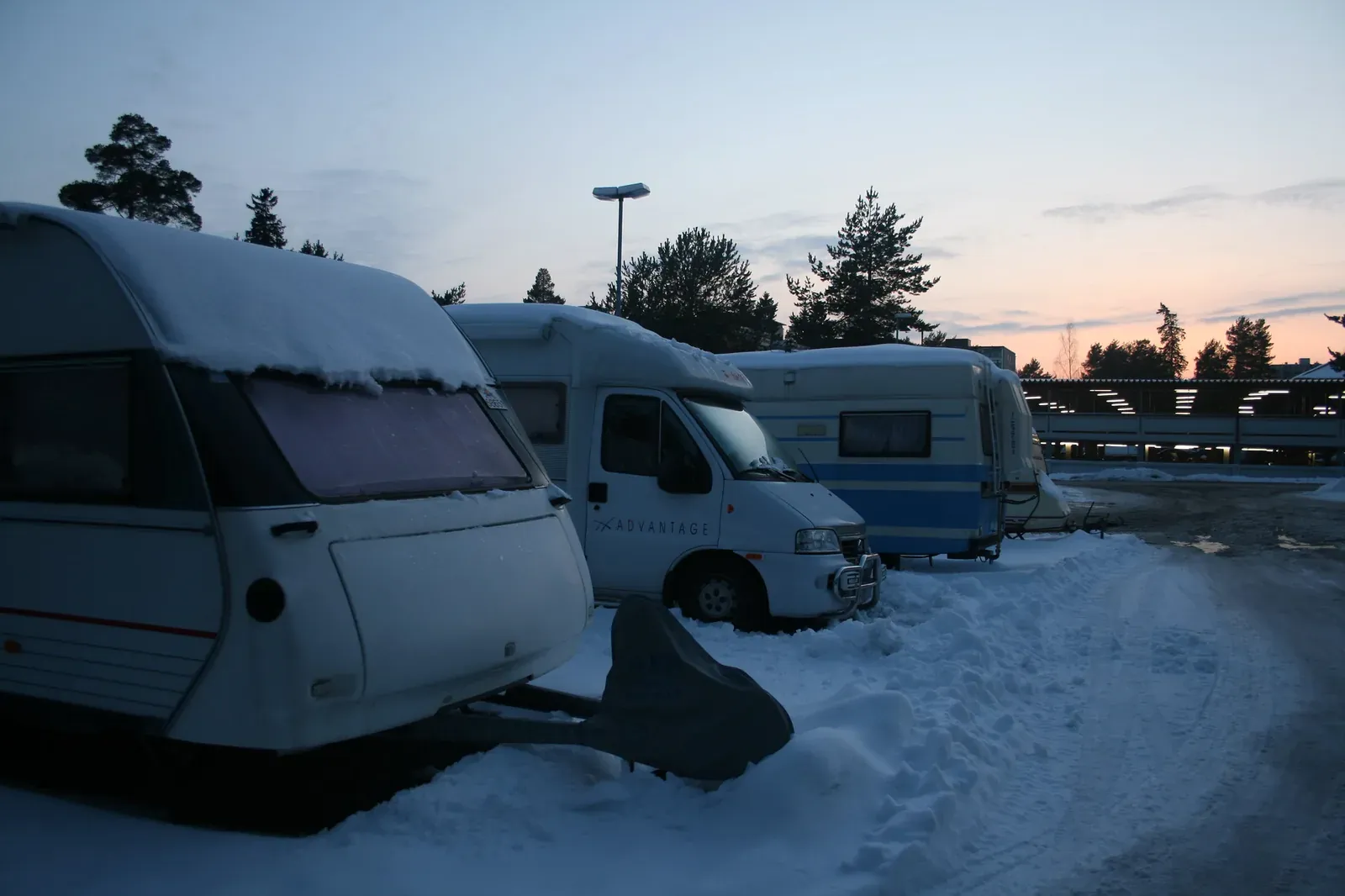
The Camping and Caravanning Club puts winter camping in one line: "The two essentials for winter camping are to be able to keep warm and for your water supply and drainage not to freeze up." External tanks "are at risk from freezing in winter even when well insulated," and 12-volt tank heaters "may flatten your leisure battery." A diesel heater solves the first half of that. The second half is up to your rig.
If you are still deciding what that rig should be, Truck Camper vs Camper Van vs Travel Trailer covers how each one handles winter. And if you'd rather chase the sun than heat a camper, the BLM dispersed camping guide explains the Long-Term Visitor Areas where winter visitors can stay for months. Gary Matos's Roll Your Own camper rally guide is set in Quartzsite, Arizona, which he says has hosted snowbirds "for decades seeking a warmer climate."
Heat the camper, vent the exhaust, and trust the alarm over your nose.

About the Author
Steven Marty
My name is Steven Marty, I am a guest contributor to the Whiskey 7 Backroads blog.
View all posts by Steven →