


The Starlink Mini wasn't a smaller version of a satellite dish. It was the moment the internet became portable enough to be useful off-grid. How the 1.10 kg, USB-C PD-powered dish changed what overlanders, campers, hikers, remote workers, and families can do off-grid.
The moment Brent Conklin pulled the Starlink Mini out of its shipping box, he knew something had shifted. Not in a dramatic, clouds-parting way. More like the quiet click of a puzzle piece finding its home after years of forcing the wrong shapes into place. The dish weighed 1.10 kilograms. He could hold it in one hand while pouring coffee with the other. The dimensions read 298.5 by 259 millimeters according to the Verge's hands-on review, which meant the thing was smaller than his laptop bag. And it ran on USB-C power delivery. The same port that charged his phone.
For years, the off-grid connectivity problem had two bad answers. Option one: cell boosters like WeBoost units strapped to roof racks, which worked great until the road wandered beyond carrier coverage, which in the backcountry of Idaho or Montana or anywhere worth going happened about thirty miles from the trailhead. Option two: the full Starlink Standard setup, which delivered broadband speeds but demanded a seven-kilogram dish, a separate power brick, fifty to one hundred watts of draw, and an inverter to convert 12V vehicle power to 120V AC. That setup worked for RV parks with shore power. It did not work for a dispersed camp in the Alabama Hills or a convoy grinding through central Idaho's Brewer Creek Road.
The Mini changed the math. At a typical draw of 25 to 40 watts, according to US Mobile's comparison guide, it runs directly from a USB-C power delivery source. A 100 Wh USB-C PD power bank. A 12V-to-USB-C PD 100 W buck converter wired to the house battery. No inverter. No separate router box, because the Mini has Wi-Fi 5 built into the dish itself, covering up to 112 square meters per Starlink's Mini specification page. The question stopped being "can I bring internet?" and became "why wouldn't I?"
What follows is not a product review. Brent has those bookmarked, and the links are woven throughout. This is a behavior-change story. Five use cases. Five groups of people who do things differently now than they did before the Mini existed. Overlanders. Dispersed campers. Section hikers. Remote workers. Families who want their kids to stop asking "are we there yet?" Each section follows the same structure: a scene, the stats that matter, the kit that makes it work, and the gotchas that nobody mentions until you're fifty miles from pavement with a dead dish.
Overlanding: When the Convoy Needs Weather Radar at Mile Sixty
Day two of a five-day loop through central Idaho's backcountry. Three trucks. The Magruder Trail. The cell signal died somewhere around mile twelve, and now the convoy is sixty miles deep with a mountain pass crossing scheduled for tomorrow morning. The lead truck, a built-out overland rig with a rooftop tent and a MAXTRAX recovery board strapped to the roof rack, has the Mini mounted flat against the board's surface. The driver is pulling NOAA weather radar on a tablet while the other two trucks idle behind, waiting for the verdict on tomorrow's weather window.
This scene was not possible two years ago. Not without a satellite phone at three to five dollars per minute, or a Garmin inReach sending one-way text messages to someone back home who could relay the forecast. The Mini rewrote the logistics.
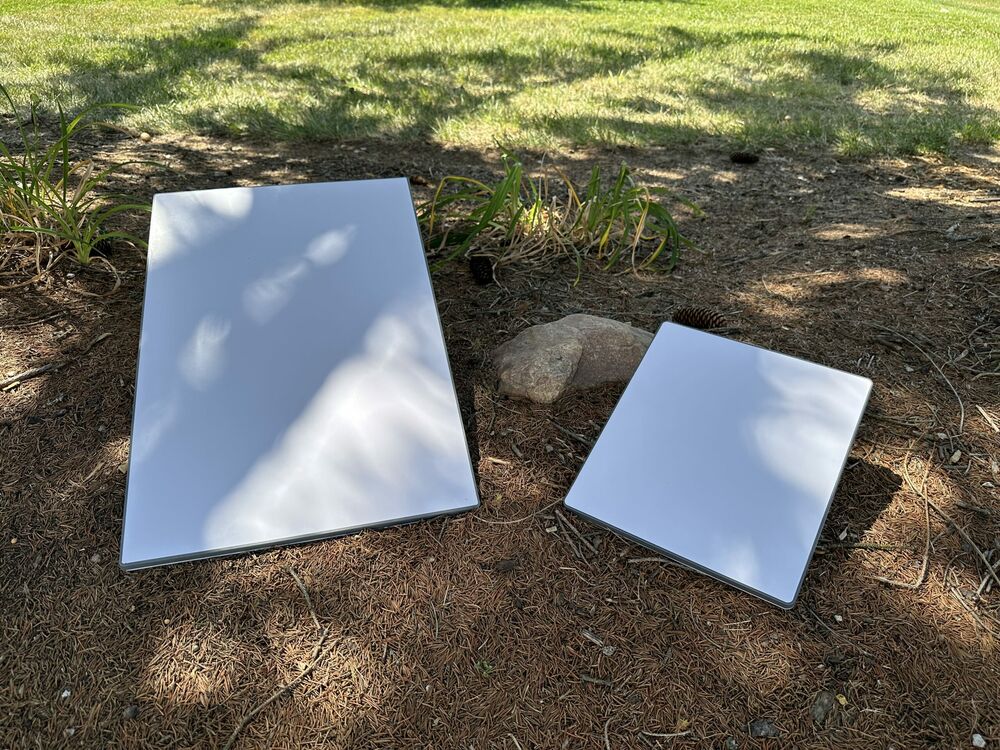
The weight matters most for overlanders. At 1.10 kilograms for the dish alone, or 1.16 kilograms with the integrated kickstand per the Starlink's Mini specification page, the Mini does not tip the balance of a loaded roof rack. Compare that to the Standard dish at roughly seven kilograms with mount and cable, and the difference is not incremental. It is categorical. The Mini fits inside a standard Pelican-style case, in the side pocket of a rooftop tent, or strapped flat to a MAXTRAX board. CTMods' overlanding clamp mount guide explicitly positions the Mini as the "fits on roof rack" choice versus the Standard's "needs its own mount and a fifty-watt inverter."
Power draw seals the deal. The Mini pulls 25 to 40 watts under typical load, which means a 100-watt USB-C power delivery bank can run it for roughly three hours. For longer trips, a 12V-to-USB-C power delivery buck converter wired to the vehicle's auxiliary battery provides indefinite runtime while driving. Montana Motor Stables' disaster communications write-up documented power consumption across multiple battery sources and confirmed that the 25 to 40-watt range holds even in field conditions.
The kit list is short. The Mini dish itself. A USB-C power delivery source rated for 100 watts minimum at 20 volts and 5 amps, whether that is a battery bank, a 12V buck converter, or AC power at camp. And a mount: a small tripod, a MAXTRAX-mounted bracket, or a suction-cup roof mount for the truly minimalist.
The gotchas are less obvious. Line of sight to the sky is non-negotiable. The Mini's 110-degree field of view per the SpaceX spec sheet sounds generous until you park under a tree canopy or in a canyon. Place the dish on the roof or the MAXTRAX, not inside the cab, not in the bed of the truck under a tonneau cover. The Mini also runs warm in direct sun. Leave airflow around the housing, or it will thermal-throttle to slower speeds, a behavior Dishytech's six-month review documented during summer field tests. And the 12V-to-USB-C buck converter must be rated for 100 watts. Sixty-watt converters cause the Mini to drop connection under load, because the dish's peak draw hits 60 to 80 watts during heavy use.
Before the Mini, overlanders chose between connectivity and weight. Now they choose neither. The dish goes on the roof, the power comes from the battery, and the convoy gets weather radar at mile sixty.
Dispersed Camping: Three Rigs, One Dish, Zero Cell Signal
Two couples and a solo driver. Three rigs spread across a dispersed site in the Alabama Hills outside Lone Pine, California. The cell signal reads one bar on AT&T, nothing on Verizon, and the carrier handoff keeps dropping. The lead truck has the Mini mounted on a MAXTRAX board, and the dish is providing Wi-Fi to all three vehicles via the built-in router. One couple is streaming a movie in their camper shell. The solo driver is uploading photos to a cloud backup. The other couple is video-calling family back home. Nobody is fighting over bandwidth.
Dispersed camping on BLM or National Forest land means no infrastructure. No power hookups. No Wi-Fi. Often no cell signal for thirty miles in any direction. Before the Mini, dispersed campers either went dark for the trip, relying on a SPOT or inReach for emergencies only, or they rented satellite phones at Iridium rates: three to five dollars per minute, a thousand dollars or more for the hardware. The Mini collapsed that gap.
The bandwidth numbers hold up in the field. Dishytech's six-month review documented 50 to 200 megabits per second down and 10 to 20 megabits per second up even in obstructed-sky conditions like mountain valleys and partial tree cover. That is more than enough for streaming, video calls, and file syncing across three vehicles. Latency runs 25 to 50 milliseconds typical, which is usable for video calls and voice chat. Not gaming-tier, but nobody is playing competitive shooters at a dispersed camp in the Alabama Hills.
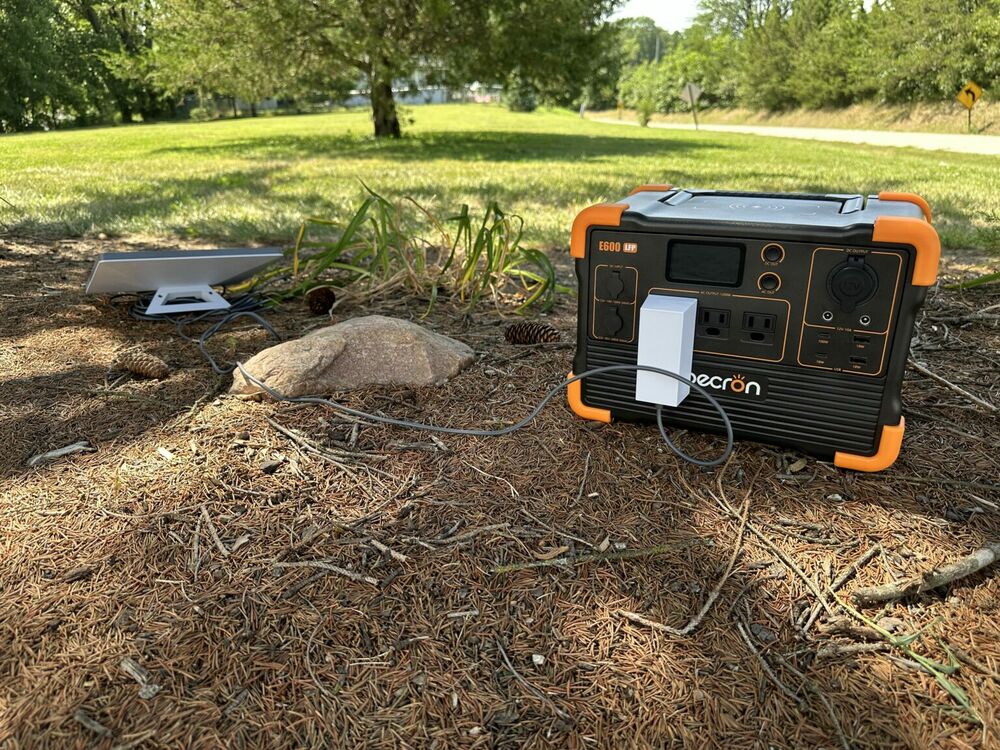
Power math is where dispersed camping gets interesting. The Mini draws roughly 30 watts at typical load. A 500 watt-hour portable battery gives approximately 16 hours of always-on internet. That is enough for a three-day dispersed camp with intermittent recharges from a small solar panel. Dishytech's review specifically called out the use case: "lower power consumption and DC input meant I could power it from my Scamp's battery or a power bank." That sentence describes Brent's audience exactly.
The kit for dispersed camping adds one item to the overlanding list: an in-vehicle Wi-Fi rebroadcast. The Mini's built-in router covers 112 square meters, but if the three rigs are spread across a dispersed site, range becomes an issue. A phone in hotspot mode works. A dedicated travel router like the GL.iNet Slate works better. The power station needs to be 500 watt-hours or larger for multi-day trips without solar.
Gotchas multiply in dispersed settings. The Mini needs unobstructed sky view, and tight dispersed sites with canyon walls or heavy tree canopy degrade speeds and cause intermittent drops. Sharing Wi-Fi across rigs means bandwidth per user drops. For three rigs streaming video simultaneously, expect 30 megabits per second per rig at best. And BLM dispersed camping has no shore power, so battery sizing matters. Bring twice what you think you need. The difference between a 500 watt-hour pack and a 300 watt-hour pack is the difference between internet for three days and internet for one.
Before the Mini, dispersed camping meant disconnection by default. Now it means disconnection by choice.
Section Hiking: When the Sierra Needs a Bail-Out Option
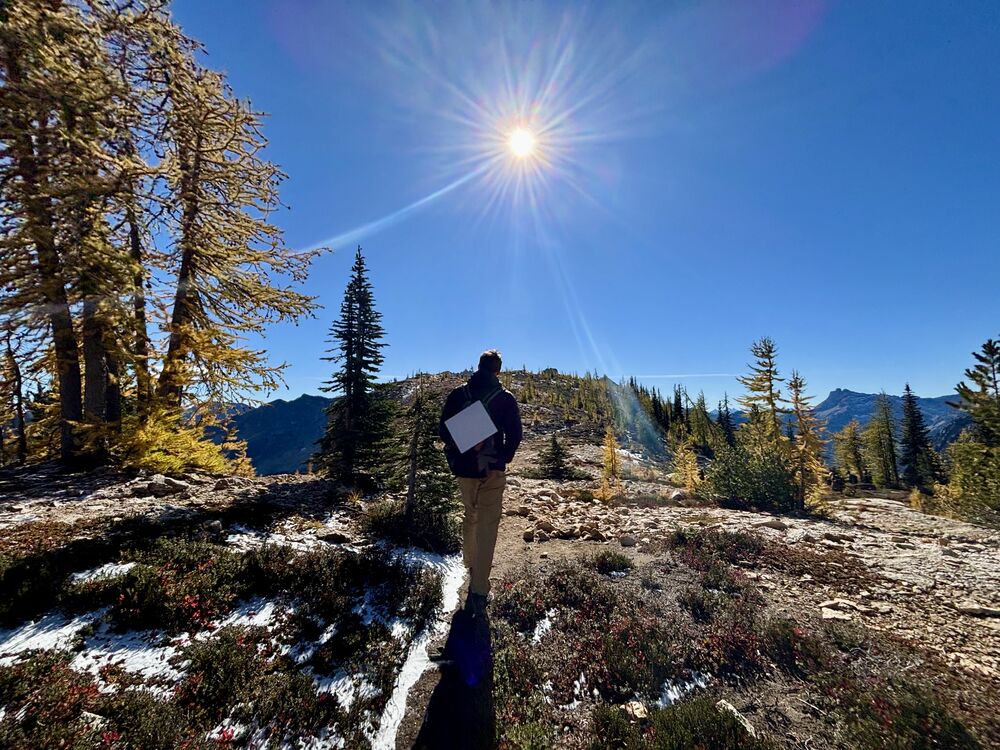
Fourteen days into a 260-mile Sierra section of the Pacific Crest Trail. Five days from the next resupply town. Cell signal has been nonexistent since day three. The section hiker, a forty-something weekend warrior with a bear canister and five days of food in the pack, is carrying something unusual: a Starlink Mini in a hard case, plus a 100 watt-hour USB-C battery. Total added weight: roughly 1.6 kilograms. The Mini is not for daily use. It is for the rare "I need to call my mom" moment, the rare "weather just turned bad, and I need a forecast" moment, the rare "I'm injured and need more than an SOS beacon" moment.
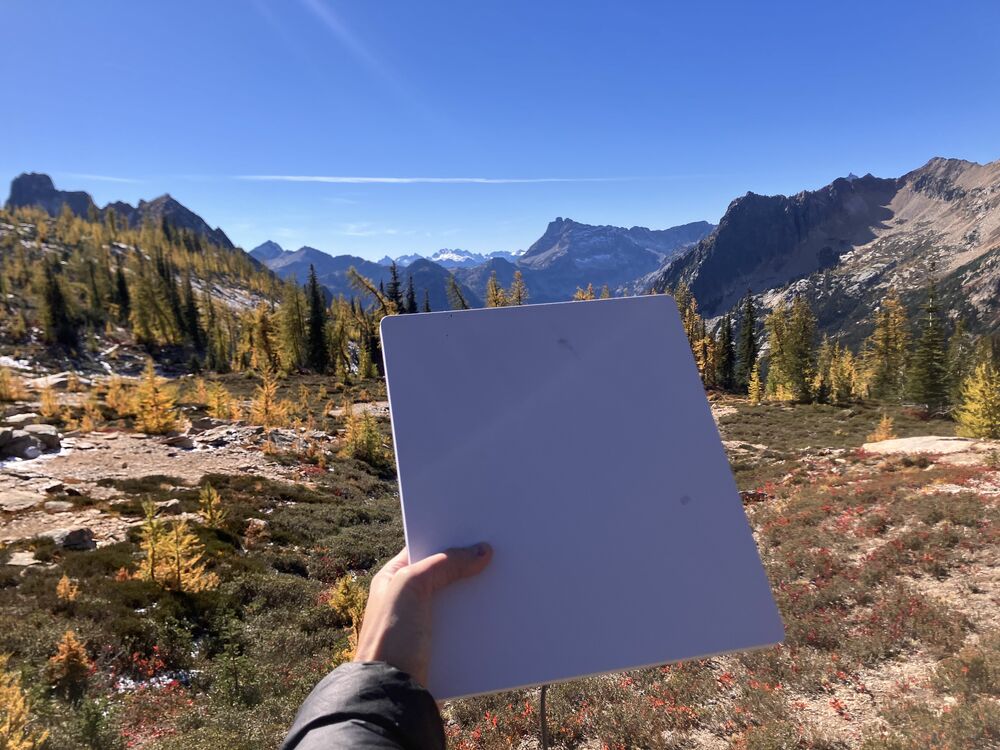
The weight penalty is real. A Garmin inReach Mini 2 weighs 100 grams. The Mini dish alone weighs 1.10 kilograms. That is not a rounding error. That is the difference between a thru-hiker's ultralight philosophy and a section hiker's "I'm already carrying a bear can" pragmatism. Yahoo Tech's coverage of the Verge's wilderness test documented a reporter strapping the Mini to a backpack for a ten-mile Cutthroat Pass hike in Washington. The use case is section hiking, not thru-hiking. The Mini makes sense for five- to fourteen-day trips, not continuous 1,500-mile hikes.
The performance numbers justify the weight for the right user. Setup time runs three to five minutes from "off in the pack" to "streaming," per the Verge's hands-on review. Warm starts from the same position take roughly thirty seconds. A 100 watt-hour USB-C battery provides approximately six hours of standby at the Mini's idle draw of 15 to 20 watts, per dishytech's review. That is enough for emergency-only use across a week-long section, with careful power management.
The kit for section hiking is minimal. The Mini dish. A 100 watt-hour USB-C power delivery battery from Anker, Jackery, or similar. A small folding tripod or a flat rock to serve as a natural surface mount. The total weight with dish, battery, and minimal accessories runs roughly 1.6 kilograms, or 3.5 pounds. That is heavy for a thru-hiker but reasonable for a section hiker already carrying a bear canister and five days of food.
Compare that to the current satellite communicator market. Adventure Alan's satellite communicator guide covers the options: Zoleo, inReach Mini 2, ACR Bivystick. Hardware runs $200 to $400. Service runs $15 to $65 per month. Those devices provide two-way text and SOS capability. The Mini provides broadband. Different categories, different use cases. For section hikers who want both, carrying both makes sense. The inReach for daily check-ins and SOS. The Mini for the rare moment when a text message is not enough.
Gotchas for section hiking are weight-driven. Carrying the Mini means packing it in something protective. A hard case adds weight but protects the panel from a fall onto granite. A Mini in the pack at the start of a fourteen-day section will drain a 100 Wh battery in roughly six hours of idle, and how often that battery gets drained depends on usage. Battery sizing is critical. And the Mini is not a replacement for a dedicated SOS device. It requires power, setup time, and sky view. An inReach works when you are injured and cannot stand up to position a dish.
Before the Mini, section hikers chose between text-only satellite communicators and going dark. Now they can carry broadband into the backcountry, if they are willing to carry the weight.
Remote Work: The Full Workday from a Harvest Hosts Spot
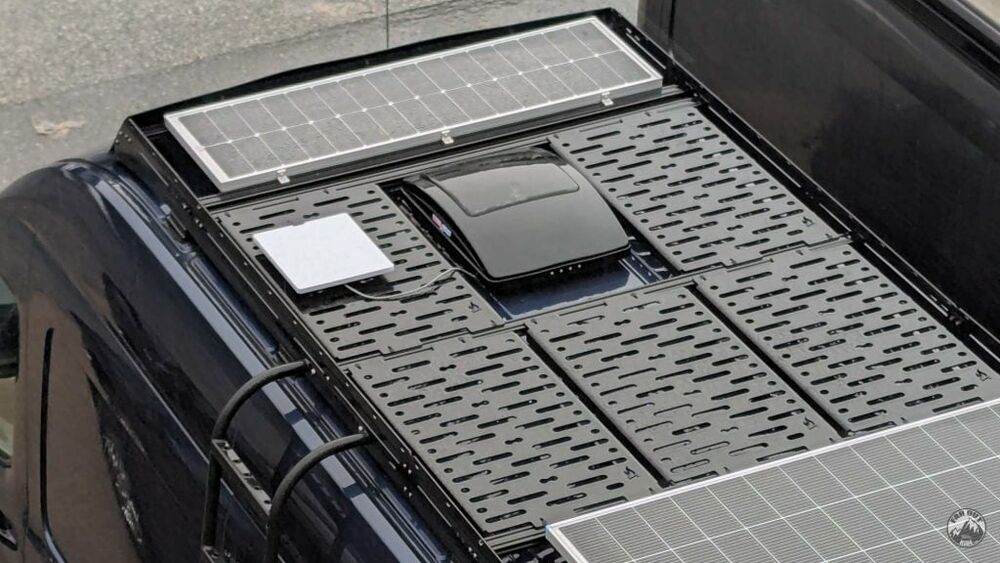
A 2018 Ford Transit conversion van parked at a Harvest Hosts spot outside Sedona, Arizona. The remote worker inside is seven hours into an eight-hour workday. Video calls with clients. File uploads to cloud drives. Slack threads. Screen-share design reviews. The Mini is mounted to the van roof with a suction-cup mount, fed via a 12V-to-USB-C power delivery buck converter wired to the 200 amp-hour lithium house battery. The engine has not run since morning. The solar panels on the roof are topping off the battery. The workday is proceeding as if the van were parked in a suburban driveway with fiber internet.
This is the use case that sells the Mini to the vanlife and RV crowd. Before the Mini, remote work from a van meant relying on RV park Wi-Fi, which is slow, shared, and insecure, or cell boosters, which fail outside carrier coverage. The Mini at 100 to 250 megabits per second down under full sky view, per dishytech's review, is faster than most RV park Wi-Fi and most cell-based hotspots. The Outfitter Satellite review called out the key integration: "compact satellite internet terminal with the router integrated into the hardware." No separate Wi-Fi router box. No extra cables. The dish is the router.
Power math for remote work is straightforward. The Mini idles at roughly 20 watts, peaks at 60 to 80 watts under heavy load. A full eight-hour workday at typical load burns roughly 200 to 320 watt-hours, or about twenty times less than the energy a 200 amp-hour lithium house battery at 12 volts holds (2,400 watt-hours total). The Mini consumes less than fifteen percent of that capacity over a full workday. No need to idle the engine. No need to plug into shore power. The math works.
Verge's hands-on field notes specifically examined remote work during driving. The Mini maintained usable connectivity during highway travel, though with reduced speeds and increased latency compared to stationary use. For the remote worker who needs to take a call while the van is moving between campsites, the Mini delivers. Not perfectly, but usably.
The kit for van-based remote work includes the Mini dish, a roof mount rated for highway speeds, and a 12V-to-USB-C power delivery buck converter. The most common installation uses a Victron or Renogy buck converter wired to the house battery. Suction-cup mounts work for stationary use but are unreliable at highway speeds. Magnetic or through-bolt mounts are more reliable for vans that move daily.
Gotchas for remote work center on power and position. Idle power at 20 watts means a full workday burns about 160 watt-hours in light-duty use, while a continuous video-call session at typical 25–40 W load burns roughly 200 to 320 watt-hours. Either way, the Mini is fine for a 200-amp-hour lithium van but not fine for a smaller RV battery without solar. If the van is parked under heavy tree cover, whether forest or urban canyon, the Mini's performance degrades significantly. A fixed-mount RV internet solution with a tall mast may be required for full-time remote workers who cannot always park in open sky. And video calls are latency-sensitive. The Mini's 25 to 50 milliseconds of latency is usable, but not as crisp as fiber. Clients may notice a slight delay.
Before the Mini, remote work from a van meant compromises. Cell dead zones. Slow RV park Wi-Fi. Driving to town for a coffee shop with decent internet. Now the remote worker parks where the view is good, and the work happens anyway.
Recreation and Family Camping: When the Kids Need Streaming and the Parents Need Weather Radar
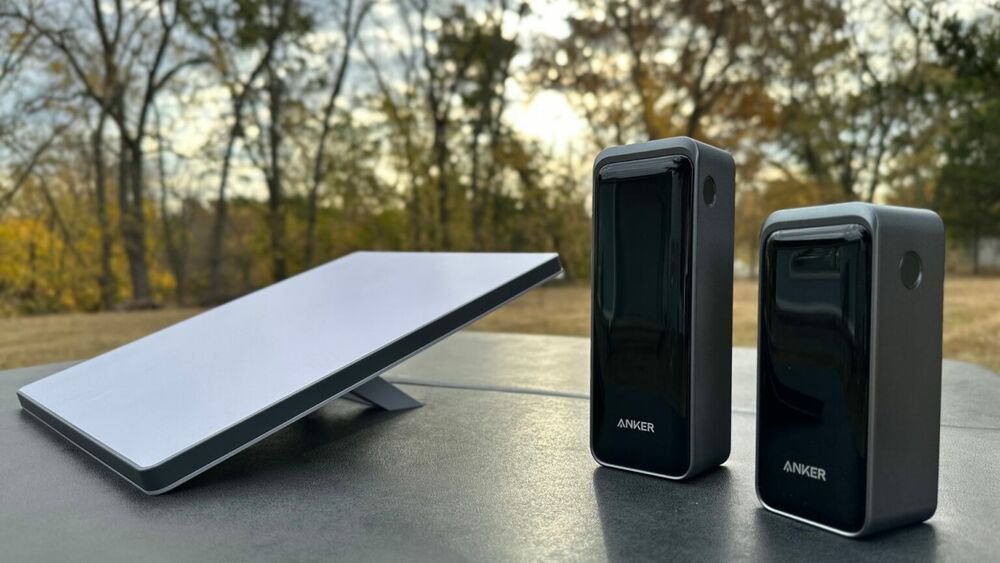
A family of four with two teenagers. Established campsite in the Mount Hood National Forest. Saturday afternoon. The Mini is set up on the picnic table, angled toward the clearest patch of sky visible through the tree canopy. One teenager is streaming video in the back of the truck. The other is playing an online tablet game. The parents are checking weather radar for tomorrow's hike and occasionally glancing at work email. The cell signal at this campsite is nonexistent. Has been for years. The family used to bring board games and accept the screen-free weekend. Now they bring the Mini and accept that the kids will be happier, which means the parents will be happier, which means the hike tomorrow will happen without complaints.
This is not a survival use case. It is a recreation use case. The kind that did not exist at this price point before the Mini. The Verge's review framed the Mini explicitly around the "take it anywhere" recreation market. Brent's own story. His kids, his wife, and his truck. That is the kind of family the Mini was built for. Campers who go deep want their kids to have screen time and a way to check the weather without driving back to town. For them, the Mini is the difference between a connected family weekend and one spent in the dark. The Mini is the device that makes both non-negotiable work.
Setup time for non-technical users runs roughly ten minutes from box to streaming. That is longer than the three to five minutes for experienced users, because the Mini requires understanding USB-C power delivery, which is not intuitive for everyone. But the Mini's app-based setup, using a phone to configure the Wi-Fi network, makes the process manageable for parents who are not network engineers. A single connection from the phone to the dish, a few taps, and the family is online.
Bandwidth shared across four devices runs approximately 50 megabits per second per device at typical obstruction levels. That is plenty for streaming one video, running a tablet game, and checking weather radar simultaneously. The math works for a family of four. It starts to strain for larger groups or heavy simultaneous use.
Power on a single 200-watt-hour power bank gives approximately six hours of family-friendly use with intermittent streaming. A 500 watt-hour pack extends that to roughly sixteen hours, which covers most family weekends. The Starlink's Mini specification page confirms the power draw numbers that make this math possible.
The kit for family camping is simple. The Mini dish. A 200 to 500 watt-hour USB-C power delivery power bank, depending on trip length. A simple mount, whether a picnic-table tripod, a MAXTRAX-style bracket, or the dish laid flat on a stump with the integrated kickstand deployed.
Gotchas for family camping are orientation-driven. The Mini's performance degrades significantly with even a thirty-degree tilt away from vertical. Non-technical family members need to understand that the dish must "see the sky," not point at the trees, not sit at an angle because the picnic table is uneven. Streaming video chews power fast. A 200 watt-hour battery gives about six hours of family use, which is fine for an afternoon but not for a full weekend. And tree cover at family-camping-friendly sites, the kind with picnic tables and fire rings and flat tent pads, is the number one speed killer. Pick the most open spot in the campsite for the dish, even if it is not the most aesthetic spot.
Before the Mini, family camping meant choosing between screens and wilderness. Now it means choosing both, if the family wants both. The kids get their streaming. The parents get their weather radar. The hike tomorrow happens without the "I'm bored" complaints that used to start at hour three.
Remote Cabins and Homesteads: The Quiet, Fixed-Mount Use Case
A 14x24-foot log cabin at 6,400 feet elevation in the Sawtooth Range of central Idaho. The owner built it himself, runs on off-grid solar, has a 1,200-gallon cistern for water, and three walls of south-facing windows. For the first eight years of living there, he made do with a cell booster that worked about half the time and an Iridium sat phone for emergencies. The Mini changed the math.
He mounted it to the south wall of the cabin with a 2-inch pipe standoff, ran the USB-C power cable through the wall into a 12V-to-USB-C PD converter wired to his solar battery bank, and configured the dish's Wi-Fi as a fixed network for the cabin. The dish points at the same patch of sky every day. The converter stays on 24/7. The Mini consumes roughly 20 W idle, 60 to 80 W peak, and runs $3 to $5 worth of solar recharge per week at his latitude. That is less than the Iridium sat phone used to cost him per month, with broadband instead of 3- to 5-dollar-per-minute voice.
The use case is different from every other section in this post. Overlanders, dispersed campers, section hikers, remote workers, and family campers all benefit from the Mini because it travels. The remote cabin case is the inverse: the Mini stays put. It is the first satellite internet product that economically replaces fixed-mount installations on rural properties, because the $599 hardware + $30 to $80 monthly Roam plan is cheaper than a professionally installed full Starlink Standard for properties that only need internet three seasons a year.
The Behavior That Changed
The Starlink Mini did not invent satellite internet. It did not invent off-grid connectivity. What it did was collapse the barriers of weight, power, and complexity that kept satellite internet out of the hands of people who move. Overlanders who measure every kilogram on the roof rack. Dispersed campers with no shore power for 100 miles. Section hikers who already carry bear canisters and five days of food. Remote workers who park where the view is good, not where the cell signal is strong. Families who want their kids to stop asking "are we there yet" without giving up the wilderness.
The numbers tell the story. A 1.10 kilogram dish per Starlink's Mini specification page. A 25 to 40 watt typical draw per US Mobile's guide. A 100 to 250 megabits per second down under open sky per dishytech's review. USB-C power delivery input, which means the same port that charges a phone can power broadband internet in the backcountry.
Brent Conklin has carried the Mini on various trips since it arrived. From the local dispersed campsite in Montana to Baja, Mexico. Each time, the pattern was the same. Since it's mounted on the top of the EarthCruiser, flip a switch to turn it on. Wait three minutes. Stream weather radar, upload photos, video-call family. Flip the switch off when not needing it. Move to the next camp. The friction that used to exist between "off-grid" and "connected" is gone. Not reduced. Gone.
The Mini era is not about the dish. It is about what people do now that the dish exists. And what they do is go farther, stay longer, and stay connected anyway.
Go explore, stay safe, and thanks for reading our blog.
About the Author
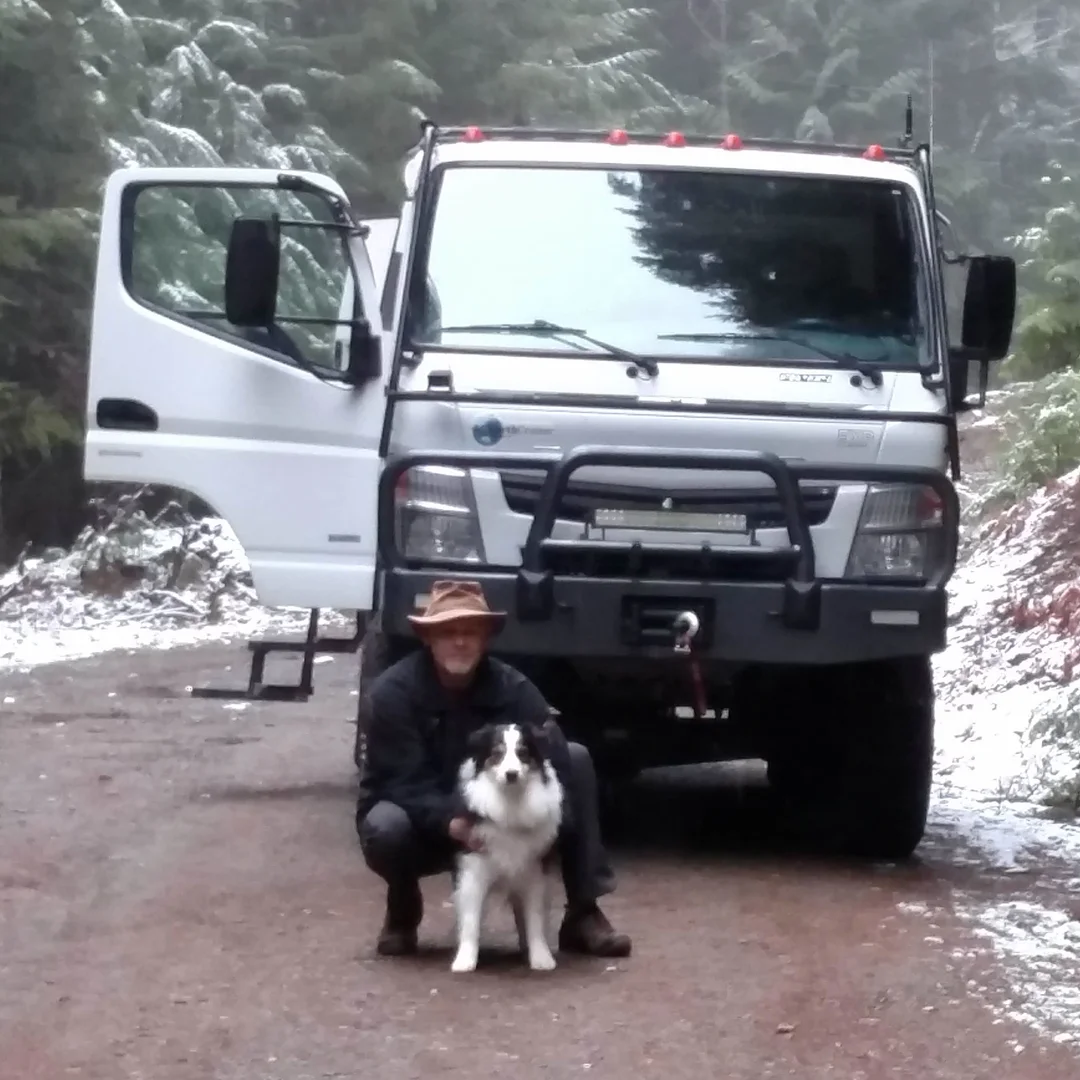
Brent Conklin
Owner of Whiskey7backroads and avid explorer. I am a Ham Radio extra class operator and frequent the Old Miss Net. I have been married for 37 years to Cheryl and we have 2 boys and 2 dogs.